



The Fermentation Myth
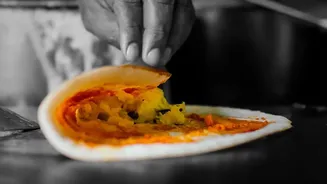
Many home cooks, familiar with making breads like naan or bhatura, instinctively believe that poori dough must also need a long resting period to rise. Bhatura, for instance, often uses leavening agents and curd, requiring fermentation to achieve its
characteristic texture. This has led to the common misconception that all Indian breads follow the same rule. However, poori is fundamentally different. It is an unleavened bread, meaning it contains no yeast, baking powder, or other leavening agents designed to create gas and make the dough rise. Its puff comes from a different kind of kitchen magic.
The Science of the Puff
So, if there's no yeast, why does a poori puff into a perfect golden sphere? The secret lies in steam. When the thinly rolled disc of dough hits hot oil, the moisture trapped within the flour rapidly turns into steam. This steam creates pressure, pushing outwards against the dough's surface and causing it to inflate like a balloon. For this to happen successfully, two things are crucial: a well-structured dough with developed gluten and oil at the correct, high temperature. The goal of kneading poori dough is not to activate yeast, but to develop a strong yet pliable gluten network that can trap that steam effectively.
Why a Short Rest is Essential
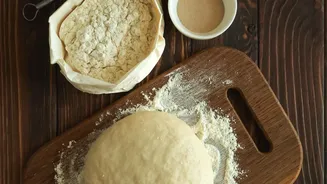
While a long fermentation is unnecessary and even detrimental, a short resting period is vital. Most experts agree that a rest of 10 to 20 minutes is ideal. This brief pause is not for leavening. Instead, it allows the flour to fully hydrate, absorbing the water evenly. It also gives the gluten, which gets tightened during kneading, a chance to relax. This makes the dough easier to roll out smoothly and evenly without tearing. An even thickness is critical for a uniform puff, as parts that are too thin won't puff up correctly.
The Danger of Over-Resting
Resting the dough for too long can ruin your pooris. An overly rested dough becomes too soft. This has a cascade of negative effects. A soft dough is harder to roll thinly and can lead to pooris that don't hold their shape. More importantly, it causes the poori to absorb significantly more oil during frying, resulting in a greasy, heavy final product instead of a light and crisp one. Some sources even suggest that the longer the dough rests, the quicker the puffed poori will collapse after frying. For best results, it's recommended to make the dough fresh, just before you plan to fry.
Tips for the Perfect Poori Dough
To achieve poori perfection, focus on the dough's consistency. It should be firm and stiff—noticeably firmer than a standard roti or chapati dough. This stiffness is key to preventing the poori from becoming oily. Use just enough water to bring the ingredients together into a tight, smooth ball. Adding a small amount of fine semolina (sooji or rava) can also help create a crispier texture that holds its puffed shape longer. Finally, when kneading is complete, coat the dough with a little oil to prevent a dry crust from forming while it undergoes its short, essential rest.