




Raj Bhawan (Government House)
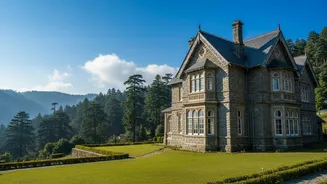
Modelled on Buckingham Palace, the Raj Bhawan is a breathtaking example of Victorian Gothic architecture. Its construction began in 1897 and took two years to complete. Originally built as the summer residence for the British governors of the North-West
Provinces, this sprawling estate covers over 200 acres, including a 45-acre golf course established in 1936. The design, resembling a Scottish castle, features imposing turrets, pointed arches, and majestic stonework. After independence, it became the residence of the Governor of Uttar Pradesh, with Sarojini Naidu being its first Indian occupant. Today, it serves as the summer retreat for the Governor of Uttarakhand. Visitors can take guided tours to admire its opulent interiors, which include grand wooden staircases and rooms that echo with tales of a bygone era.
St. John in the Wilderness Church
One of the earliest buildings in Nainital, this church dates back to 1844. It was named by Daniel Wilson, the Bishop of Calcutta, who had to stay in an unfinished cabin in the forest while laying the church's foundation. This serene neo-Gothic structure is nestled among deodar trees and offers a quiet escape. Its beautiful stained-glass windows were imported from Belgium. Inside, a brass plaque serves as a sombre memorial, listing the names of those who perished in the devastating landslide of 1880, a catastrophic event that reshaped the town. The church’s cemetery is the final resting place for many early European residents, including victims of the landslide.
Gurney House
For fans of classic literature and conservation, Gurney House is a must-visit. This was the residence of the legendary hunter-turned-conservationist Jim Corbett. He and his sister Maggie lived in this charming cottage on Ayarpatta Hill until they left for Kenya in 1947. The house was built in 1881 and still retains much of its original character, filled with Corbett's furniture and belongings. It now operates as a private residence, but the owners welcome visitors by appointment, offering a complimentary tour. A visit to Gurney House feels like stepping directly into the pages of Corbett's famous jungle tales, providing an intimate glimpse into the life of the man who put Kumaon on the world map.
The Flatts and The Mall Road
The large, level ground at the northern end of Naini Lake, known as 'The Flatts', is not a natural feature but the result of a tragedy. It was formed from the debris of the massive 1880 landslide that destroyed the original Naina Devi Temple and several buildings. The area was flattened and repurposed as a recreational ground, where polo and football matches were once played. Today, it's a cultural hub. Adjoining it is The Mall Road, the town's main artery connecting Mallital (the head of the lake) and Tallital (the foot of the lake). Lined with shops, cafes, and hotels, its layout is a classic example of colonial town planning, designed to be a promenade for residents and visitors.
Historic Clubs and Colleges
The British also established elite institutions for education and recreation. The Nainital Boat House Club, a historic institution, was once the epicentre of colonial social life, hosting regattas and ballroom evenings. Prestigious boarding schools like Sherwood College and St. Joseph's College were founded in the British public school tradition, earning Nainital the nickname 'Eton of the East'. These institutions, many of which are still operational, feature stunning colonial architecture and continue to be an integral part of Nainital's identity, representing a legacy of education and colonial society in the hills.