
The Old Boundary Line
For many years, the edge of the solar system was considered to be the heliopause. This is the point where the solar wind, a constant stream of charged particles flowing from the Sun, is no longer strong enough to push back the stellar winds of interstellar
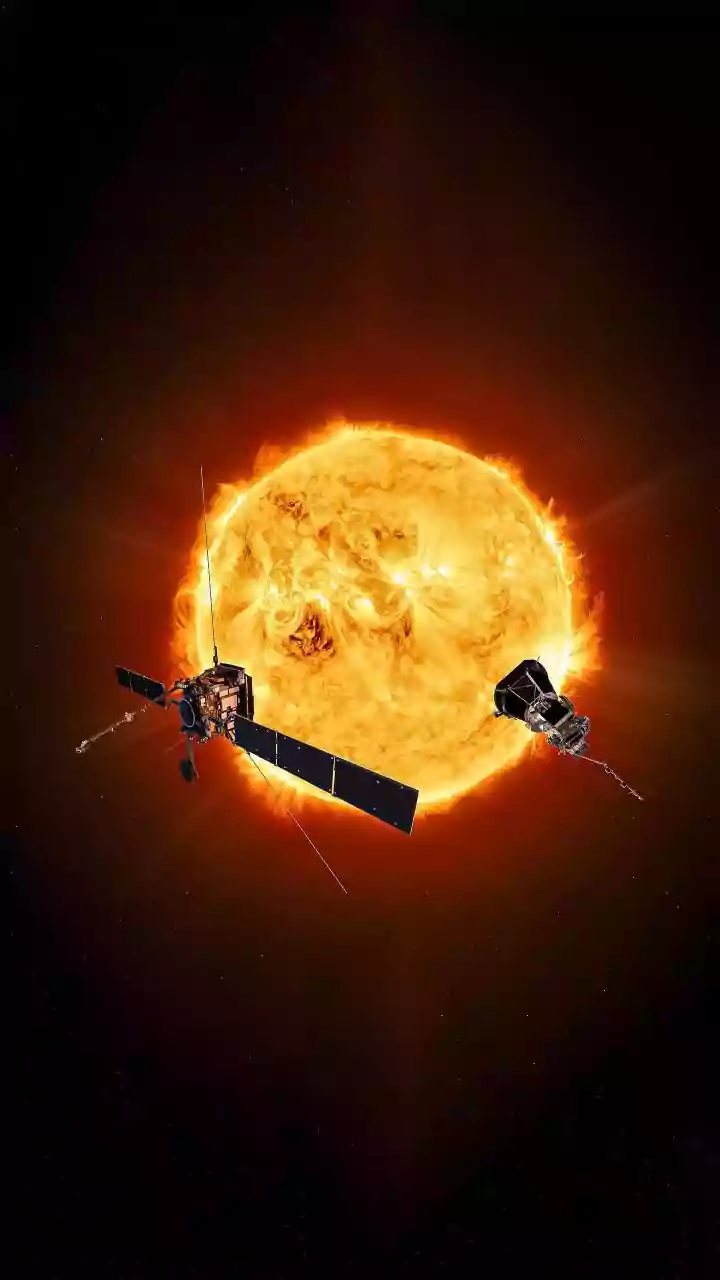
space. This created a vast, protective bubble called the heliosphere around the planets. NASA's Voyager 1 and 2 spacecraft famously crossed this boundary, entering interstellar space at a distance of about 120 astronomical units (AU) from the Sun—an AU being the distance from the Earth to the Sun. For all intents and purposes, this was seen as leaving our celestial neighbourhood. This definition, however, is based on the reach of the Sun's material, not its fundamental force.
A New Gravitational Frontier
Recently, scientists including former NASA chief scientist Jim Green have proposed a new, much larger boundary. Their idea isn't based on the solar wind but on the far more extensive reach of the Sun's gravity. They argue that the true edge of the solar system is the point where the Sun's gravitational pull gives way to the gravitational pull of the wider Milky Way galaxy. According to their calculations, this 'Solar Gravitational Frontier' extends out to potentially 241,000 AU, or nearly 3.8 light-years away. This would mean our solar system is not an isolated island, but that its influence extends nearly to the doorstep of our closest stellar neighbour, Proxima Centauri, which is about 4.2 light-years away.
Gravity's Unseen Kingdom
The Sun’s gravity holds a vast, theoretical sphere of icy bodies known as the Oort Cloud in orbit. This cloud, thought to be the source of long-period comets, has an inner edge estimated to be between 2,000 and 5,000 AU and may extend outwards to 100,000 AU or more. While the Voyager probes have left the heliosphere, they are still very much inside the Sun's gravitational domain and will be for thousands of years. The Solar Gravitational Frontier concept builds on this, arguing that the entire region where the Sun's gravity dominates is functionally part of its system. This region is not a sharp line but a complex area where forces, energies, and trajectories interact in a cosmic dance.
A Giant Lens in Space
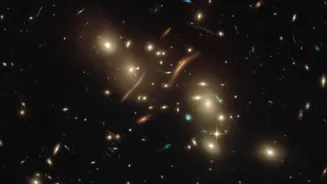
This redefinition isn't just academic; it has profound implications for the future of space exploration. The concept is closely tied to the idea of the Solar Gravitational Lens (SGL). As predicted by Albert Einstein, a massive object like the Sun bends spacetime, causing light from a distant object to bend around it and converge at a focal point. This focal line begins at a distance of about 550 AU from the Sun. By placing a spacecraft with a modest telescope at this distance, we could use the Sun as a colossal natural lens. This SGL would amplify the light from a distant exoplanet by a factor of up to 100 billion, allowing for direct, high-resolution imaging of its surface features from light-years away.
A New Map for Discovery
A mission to the SGL, currently under study by NASA's Innovative Advanced Concepts program, would represent a paradigm shift in astronomy. Instead of building ever-larger telescopes on Earth or in orbit, we could send smaller, potentially swarming spacecraft on a long journey to harness this natural phenomenon. Such a mission could reach the focal region in a few decades using advanced propulsion like solar sails. From there, it could potentially reveal atmospheric details and even signs of habitability on Earth-like worlds up to 100 light-years away. This reframes the outer solar system not as an empty void to be crossed, but as a destination in itself—a scientific frontier where the greatest telescope we can imagine is already waiting for us.