



Why Shorter is Smarter
The biggest mistake most beginners make is doing too much, too soon. An hour-long session in the first week often leads to overwhelming muscle soreness, which can kill your motivation and lead to an unplanned week off. Shorter workouts, typically in the 20-
to 30-minute range, provide enough stimulus for your body to adapt and grow stronger without causing excessive fatigue or increasing the risk of injury. This approach has a powerful psychological benefit, too. A 20-minute workout feels manageable on a busy day, making you far more likely to stick with it. Research shows that consistency is the most important factor for long-term adherence and results, and shorter sessions are the gateway to building that consistency.
The Beginner's Sweet Spot: 20-30 Minutes
For general fitness, a 20 to 30-minute workout three to four times a week is an ideal starting point. This gives you time for a proper warm-up, a focused main set, and a cool-down. The U.S. Centers for Disease Control and Prevention (CDC) recommends 150 minutes of moderate activity per week, which breaks down perfectly into five 30-minute sessions. For beginners, studies suggest that more frequent, shorter workouts are more effective for habit formation than fewer, longer ones. Remember, the goal in the first few weeks is not exhaustion; it's about teaching your body a new routine and allowing it to recover properly.
Simple Yoga Variations to Start
Yoga is an excellent practice for beginners, but complex poses can be discouraging. Start with foundational movements that build balance and flexibility. Mountain Pose (Tadasana) is the basis for many standing poses, teaching proper alignment. Child's Pose (Balasana) is a gentle resting pose that calms the mind and stretches the back. For a gentle flow, move between Cat Pose and Cow Pose to warm up the spine. Poses like Bridge Pose, Warrior I, and Cobra Pose are also great for building strength and confidence without requiring extreme flexibility. Focus on how the pose feels rather than how it looks, and hold each for as long as feels comfortable, typically around five deep breaths.
Foundation-Building Bodyweight Exercises
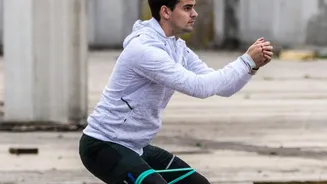
You don't need heavy weights to build strength. Bodyweight exercises are perfect for beginners because they emphasize proper form. Wall push-ups are a great way to build upper body strength before progressing to floor push-ups. Bodyweight squats teach the fundamental movement pattern for lower body strength. Planks are a fantastic exercise for building core stability; start by holding for 15-20 seconds with good form, ensuring your hips don't sag. A simple low lunge can help with hip flexibility and leg strength. As with yoga, prioritize learning the correct technique. A few well-executed reps are far more beneficial than many sloppy ones.
Listen to Your Body and Build Gradually
The phrase "no pain, no gain" is outdated and dangerous for beginners. It's crucial to learn the difference between the discomfort of muscle fatigue and the sharp signal of pain. If something hurts, stop. Your body needs rest days to recover and rebuild muscle, so aim for a day of rest for every three to five workout days. Once you feel comfortable and your routine becomes a solid habit, you can gradually increase the duration or intensity of your workouts. Add five minutes to your sessions, try a more challenging variation of an exercise, or add one more workout day per week. This slow, steady progression is the key to avoiding plateaus and staying injury-free for the long haul.