






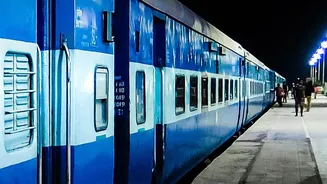

The Journey Today: Eight Hours Or More
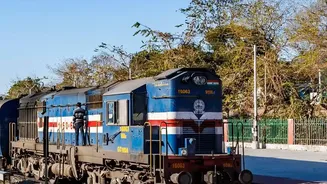
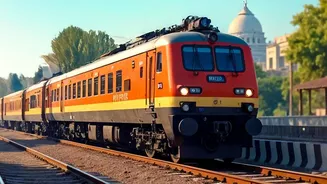
Currently, the fastest train connection between New Delhi and Varanasi is the Vande Bharat Express, which takes approximately eight hours to cover the 770-kilometre distance. Other popular trains like the Rajdhani and Shatabdi Express have similar or
longer travel times, often stretching to 10-12 hours depending on the service. For millions of travellers, whether pilgrims, tourists, or business people, this journey consumes the better part of a day. This long travel time highlights a significant infrastructure gap in one of India's most populous and economically important regions.
The High-Speed Rail Dream
The answer to this travel time challenge is the proposed Delhi-Varanasi High-Speed Rail (DVHSR) corridor. This ambitious project, managed by the National High Speed Rail Corporation Limited (NHSRCL), aims to build a dedicated 'bullet train' line. The project was announced as one of seven new high-speed corridors in the Union Budget 2026-27, signalling a major push to expand India's modern railway network beyond the currently under-construction Mumbai-Ahmedabad line. The goal is to slash the journey time to approximately three hours and 50 minutes, revolutionising connectivity across Uttar Pradesh.
How Fast Is 'Bullet' Fast?
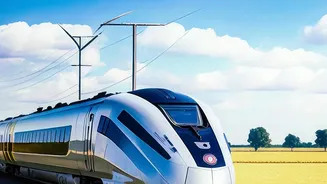
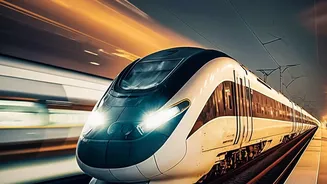
Bullet trains operate on a completely different standard from conventional rail. The DVHSR corridor is being designed for a maximum speed of 350 km/h, with trains expected to run at an operational speed of around 320 km/h. To make this possible, the alignment must be relatively straight, avoiding the sharp curves of existing railway lines. This is why engineers are charting a new path, often alongside highways or through greenfield areas, to ensure the track can handle these incredible speeds safely. The project is still in the planning and detailed project report (DPR) stage, with LiDAR surveys having been conducted to finalise the alignment.
The Proposed Path And Key Stops
The proposed 865-kilometre route will serve as a major economic artery for Uttar Pradesh. Starting from Sarai Kale Khan in Delhi, the line is planned to have 12 stations. These include crucial stops at Noida, the upcoming Noida International Airport at Jewar, Agra, Lucknow, Prayagraj, and finally Varanasi. By connecting these major urban, industrial, and religious centres, the corridor aims to do more than just speed up travel. It is envisioned as a 'growth connector' that will boost tourism to sites like the Taj Mahal in Agra and the holy cities of Prayagraj and Varanasi, while also spurring regional economic development.
Hurdles, Timelines, And The Meaning of 'Soon'
While the prospect is exciting, 'soon' is a relative term for a project of this magnitude. As of late 2026, the DVHSR is still in the pre-construction phase. The detailed project report has been prepared, but final approvals, land acquisition, and financing models are complex hurdles that lie ahead. The experience with India's first bullet train project, Mumbai-Ahmedabad, offers a realistic perspective. That project has faced significant delays due to land acquisition and other challenges, pushing its completion back by several years. While a partial section of the Mumbai-Ahmedabad line is targeted for a 2027 opening, the Delhi-Varanasi corridor is on a much longer timeline and construction has not yet been sanctioned.
Beyond Speed: The Bigger Picture
If and when it becomes a reality, the Delhi-Varanasi bullet train will be about more than just speed. It represents a leap in India's infrastructure capabilities and a significant step toward environmentally sustainable transport. The project is expected to create jobs, boost local economies around the new stations, and make inter-city travel for work and leisure far more efficient. It also ties into a larger national plan to create a 'Diamond Quadrilateral' of high-speed rail, connecting India's major metropolitan centres. The Delhi-Varanasi line could even be extended to Kolkata in the future, creating a seamless high-speed link across the entire Gangetic plain.