







More Than Just a Kitchen Staple
Rice is the primary calorie source for over half the global population, making it the world's most critical food crop. Its importance is particularly pronounced across Asia and Sub-Saharan Africa, where it forms the bedrock of daily meals and national
economies. Unlike other commodities, rice is relatively thinly traded on global markets, with most of it consumed domestically where it is grown. This makes the market exceptionally vulnerable to shocks. When a major player alters its course, the ripple effects are felt not just in kitchens but in the corridors of power.
The Delicate Link Between Price and Peace
History is filled with examples of social unrest following sharp increases in food prices, and rice is no exception. Studies have shown a strong feedback loop: rising food costs can fuel conflict, and conflict, in turn, disrupts supply chains and farming, further driving up prices. This dynamic is most acute in low-income, import-dependent nations where a sudden price spike can strain household budgets to a breaking point and erode trust in governments. For these countries, access to affordable rice is a matter of national security. When that access is threatened, simmering social and political tensions can easily boil over.
The World's Rice Bowl: A Few Key Players
The global rice trade is dominated by a handful of countries. India is the world's largest exporter, accounting for around 40% of the global market, followed by Thailand, Vietnam, and Pakistan. On the other side are major importers like the Philippines, Indonesia, and many nations across Africa that depend on this supply. This concentration of power means that policy decisions made in New Delhi have enormous global consequences. To protect its own population from inflation, India has periodically restricted exports, causing global prices to surge and sending importers scrambling for alternatives. These actions highlight the fragile balance of the global food system, where one nation's attempt to secure its own food supply can inadvertently create instability for others.
Climate Change Turns Up the Heat
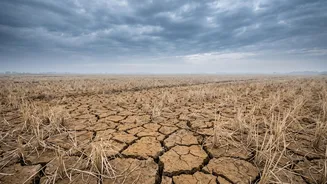
Adding another layer of pressure is the growing impact of climate change. Rice is a water-intensive crop, vulnerable to both drought and unpredictable rainfall. Extreme weather events, rising temperatures, and increased soil salinity are already threatening yields in key growing regions. Projections suggest climate change could significantly reduce rice production in the coming decades, even as the global population grows. This environmental stress directly translates to economic and political stress, as unpredictable harvests make supply chains more volatile and prices more susceptible to spikes. It forces a difficult conversation about adapting farming methods and managing water resources more effectively.
Geopolitics on the High Seas
Beyond weather and export bans, traditional geopolitical conflicts also play a significant role. Tensions in major shipping lanes, such as recent disruptions in the Gulf region, can delay shipments and increase freight and insurance costs. For a premium product like basmati rice, which has a key market in the Middle East, such disruptions directly impact trade flows and pricing. Countries that rely on these trade routes face new uncertainties, forcing exporters and importers alike to navigate a riskier and more expensive global landscape. This demonstrates how regional conflicts, even those seemingly unrelated to agriculture, can find their way to the dinner table.