





A Revolutionary Solution to Two Global Crises
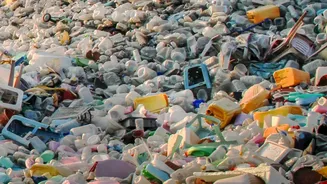
The world is grappling with a dual crisis: mountains of plastic waste that will take centuries to degrade and a growing population facing food insecurity. Now, a team of scientists has proposed a startlingly innovative solution that tackles both problems
at once. Researchers at Southern Illinois University, with backing from NASA, have successfully demonstrated a method to upcycle common plastic and inedible plant waste into nutrient-rich food ingredients. The project, known as µBites (pronounced "micro-bites"), transforms materials that would otherwise end up in landfills or oceans into edible proteins, fats, and even flavouring molecules. This breakthrough isn't just a clever chemistry trick; it represents a potential paradigm shift in how we think about waste and resources, creating value and sustenance from what we typically throw away.
How to Turn Plastic into a Cookie
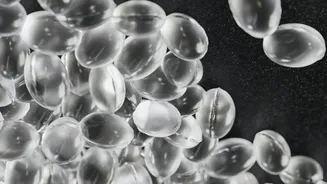
The process sounds complex, but the concept is surprisingly elegant. First, common plastics like PET (the kind used in water bottles) and agricultural biomass like corn stalks are broken down. This is done using a method called oxidative hydrothermal dissolution, which uses high-pressure water, heat, and oxygen to deconstruct the tough polymer chains into smaller, water-soluble molecules. Think of it like taking a complex structure apart into its basic building blocks. These building blocks are then fed to a community of specially engineered microbes. Different strains of yeast, a single-celled fungus, feast on this carbon-rich liquid. As they consume the broken-down waste, they grow and multiply, producing a thick biomass that is rich in proteins and fats—the essential components of food. This resulting slurry can then be processed into a usable food product.
The NASA Connection: Food for Deep Space
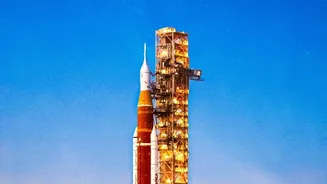
So why is NASA interested in turning plastic into food? The answer lies in the challenge of long-duration space travel. A round trip to Mars could take up to three years, and carrying enough pre-packaged food for the entire journey is a logistical nightmare. Astronauts need a way to produce their own food with minimal resources, and this technology offers a perfect solution. The µBites project was developed as part of NASA's Deep Space Food Challenge, which sought novel technologies to feed astronauts on extended missions. In space, every ounce of mass is critical. A system that can convert astronaut waste—including packaging and inedible plant parts from on-board greenhouses—into fresh, nutritious food would be a game-changer for establishing a sustainable presence on the Moon or Mars.
More Than Just Protein
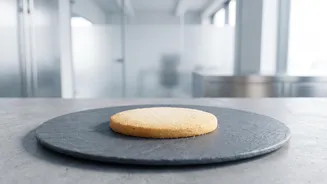
The researchers didn't stop at just creating a protein-rich sludge. To make the concept more palatable, they've engineered different strains of yeast to produce specific, valuable food additives. For example, one strain of baker's yeast was modified to create vanillin, the compound responsible for the flavor and aroma of vanilla. Another strain produces beta-carotene, a nutrient our bodies convert into Vitamin A. The final mixture, combined with traditional ingredients like fiber and starch, is then extruded through a 3D printer to create small, cookie-like snacks. While the scientists have not yet tasted their plastic-derived creations pending human testing approvals, they report that the cookies receive “high marks on aroma”.
From the Lab to the Lunchbox?
While the technology is incredibly promising, there are still significant hurdles to overcome before you see plastic-derived protein powder on your local supermarket shelf. The primary challenge is public perception. The idea of eating something that started as a plastic bottle requires a major mental shift, even if the final product is chemically entirely new and safe. Scientists stress that you are not actually eating plastic; you are eating the microbes that ate the components of plastic. Another challenge is scale. The current process is confined to the lab, and scaling it up to an industrial level that is both energy-efficient and cost-effective will require significant engineering. However, the potential applications are vast—from disaster relief zones and military operations to creating a truly circular economy here on Earth.