
A Record-Shattering Quarter
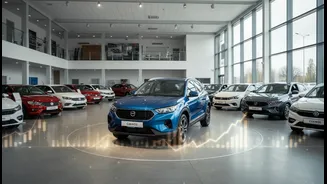
The numbers for the April to June 2026 period paint a picture of robust health for the Indian auto market. According to data from the Society of Indian Automobile Manufacturers (SIAM), the industry witnessed its best-ever first-quarter sales for passenger
vehicles (PVs), commercial vehicles (CVs), and three-wheelers. Passenger vehicle sales alone surged to a record 12.74 lakh units, a jump of nearly 26% compared to the same period last year. This remarkable growth wasn't confined to a single category. The two-wheeler segment, a key indicator of broader economic sentiment, also saw sales climb by over 20% to 56.29 lakh units. Even commercial vehicles, which reflect industrial and business activity, posted an 18.3% increase, achieving their highest-ever Q1 sales at 2.65 lakh units. This broad-based success signals strong underlying domestic demand, aided by factors like stable financing costs and the introduction of new models.
SUVs Continue Their Dominance
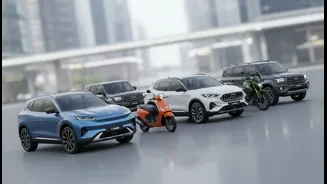
Digging deeper into the passenger vehicle segment, one trend remains undisputed: India's love for Sports Utility Vehicles (SUVs). These vehicles were the primary engine of growth, accounting for a staggering 68% of all passenger vehicle sales in the quarter. Sales of utility vehicles grew by an impressive 28.6%, outpacing the 21.3% growth seen in passenger cars. This sustained preference for SUVs is driven by consumer demand for more space, higher ground clearance, and a commanding road presence. Manufacturers have responded by flooding the market with new models across all price points, from compact SUVs to premium offerings, further fuelling the trend. Key players like Maruti Suzuki, Mahindra, and Tata Motors all reported significant year-on-year growth, largely on the back of their popular SUV lineups.
The Two-Wheeler Resurgence
The strong performance of the two-wheeler market is particularly encouraging. This segment, often seen as a barometer for the health of the rural economy, showed significant strength. Total sales neared 5.63 million units, a healthy 20% increase from the previous year. Interestingly, scooters outpaced motorcycles in terms of growth, with sales jumping 30.8% compared to the 14% growth for motorcycles. Industry experts attribute this to the continuing effect of lower GST rates and strong demand in both urban and semi-urban areas. Furthermore, the electric vehicle (EV) share in the two-wheeler space crossed the 10% mark for the first time, indicating a steady and significant shift in consumer preference towards cleaner mobility.
Alternative Fuels Gain Traction
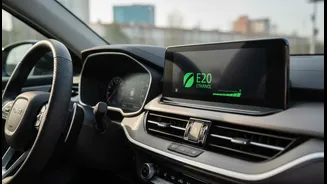
A landmark milestone was achieved in June, as vehicles powered by alternative fuels—including CNG, hybrids, and electric—collectively crossed a 40% market share in the passenger vehicle segment for the first time. This highlights a diversifying powertrain mix, with consumers increasingly opting for vehicles that offer lower running costs. CNG vehicles remain the most popular alternative, but the market for electric vehicles is also expanding. FADA reported that over 31,000 electric passenger vehicles were sold in June, the highest monthly volume ever recorded. This gradual but firm pivot towards alternative fuels is not just a policy-driven change but a consumer-led movement that automakers are actively supporting with a wider range of product offerings.
Potential Speed Bumps Ahead
Despite the record-breaking quarter, the industry remains cautiously optimistic. Several challenges could moderate this impressive growth trajectory. The progress of the monsoon remains a critical factor, as its impact on agricultural output directly influences rural demand, which has been a key driver of growth. Another concern is the rising cost of raw materials, which has been putting pressure on manufacturers' profit margins since late last year. While strong demand has so far absorbed some price hikes, sustained inflation could eventually dampen consumer sentiment. Dealers have also reported rising inventory levels for passenger vehicles, prompting calls for manufacturers to align production more closely with retail demand to avoid over-stocking.