




A Glimpse into the Distant Future
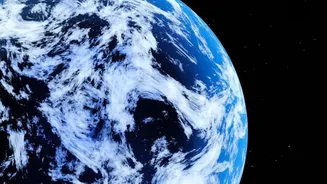
Earth’s landmasses are in constant, slow-motion transit. Driven by the movement of tectonic plates, continents drift at about the same speed your fingernails grow. This process means the world map is always changing. Extrapolating these movements far
into the future, scientists have hypothesised the formation of the next supercontinent. One leading theory describes Pangea Ultima, a colossal landmass expected to form in roughly 250 million years. In this scenario, the Atlantic Ocean closes, bringing the Americas back into collision with Africa and Europe, creating a world dominated by a single giant continent surrounded by a vast global ocean. This is not the first time Earth has done this; it's part of a supercontinent cycle that has seen landmasses assemble and break apart repeatedly over billions of years.
The Essence of a Continental Climate
To understand the concern about Pangea Ultima, one must first understand the concept of a continental climate. This type of climate occurs in the interior of large landmasses, far from the moderating influence of oceans. Places with continental climates, which include parts of North America and Asia today, experience significant temperature variations—hot summers and cold winters. Because water heats up and cools down more slowly than land, coastal areas have milder climates. Inland areas, however, lack this buffering effect, leading to more extreme annual temperature swings. They are also often characterised by lower humidity and moderate precipitation that is concentrated in the warmer months.
When a Continent Becomes a Furnace
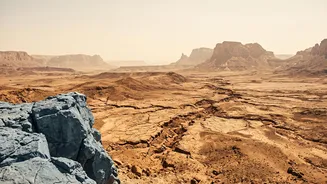
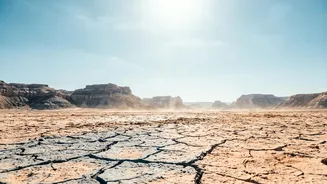
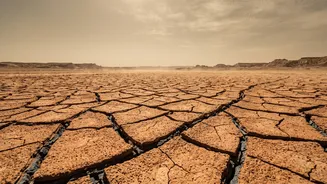
The reason Pangea Ultima is in focus is due to recent climate modelling that paints a grim picture. A 2023 study published in Nature Geoscience simulated the climate of this future world, revealing that the formation of a supercontinent would create an extreme and hostile environment. With most of the land situated in a vast interior, far from any oceanic breeze, a powerful continental climate effect would dominate. The models predict that large swathes of Pangea Ultima would become a semi-arid desert with brutal temperature extremes. Monthly average temperatures could soar to between 40 and 50 degrees Celsius. This extreme heat is not just due to the land's configuration, but is also amplified by two other factors: higher atmospheric carbon dioxide from volcanic activity related to the continent's formation, and a sun that will naturally be brighter and hotter 250 million years from now.
A Warning for Mammals
The implications of this research are stark, particularly for mammals, including any potential descendants of humans. The climate simulations suggest that the extreme heat of Pangea Ultima would push much of the landmass beyond the physiological limits of mammalian life. When relentless high temperatures are combined with high humidity, it becomes impossible for mammals to cool their bodies through sweating. According to the models, under some high-carbon-dioxide scenarios, as little as 8% of the supercontinent's land would remain habitable for mammals. While life would surely exist—perhaps in polar refuges or in the oceans—the dominant land animals of our current era would face a mass extinction event driven by the very geology of the planet.
Why We Study a World So Far Away
Studying a world a quarter of a billion years in the future is more than just a “fun exercise,” as the original researcher, Christopher Scotese, once called it. These advanced climate models provide a natural laboratory for testing the tipping points of our planet's climate system. By understanding how the arrangement of continents can fundamentally alter habitability, scientists can refine their knowledge of the interplay between geology, oceans, and atmosphere. This research also has implications for the search for life on other planets. It shows that the simple presence of a large landmass is not enough to guarantee a habitable world; its specific geography is crucial. Understanding these deep-time processes helps us appreciate the delicate climatic balance that makes our current Earth so uniquely hospitable.