

The Ghost Particle
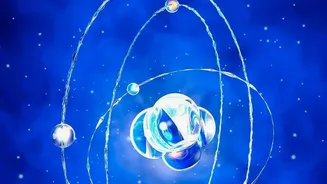
To understand this cosmic tipping point, we first need to meet the neutrino. Dubbed the 'ghost particle', neutrinos are fundamental particles with almost no mass and no electric charge. They interact so weakly with other matter that trillions of them
pass through your body every second without you ever noticing. Despite their ethereal nature, they are created in immense quantities during the most violent events in the universe, including the core collapse of a massive star. In these moments, neutrinos become the primary carriers of energy, whisking away about 99% of the energy released when a star's core implodes.
Anatomy of a Stellar Death
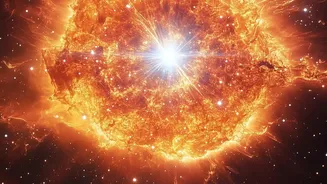
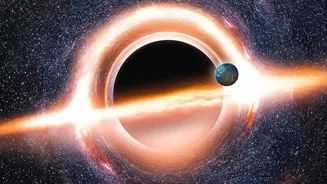
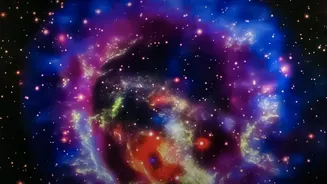
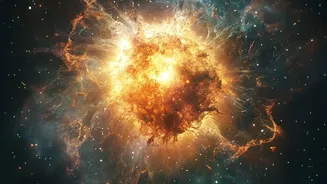
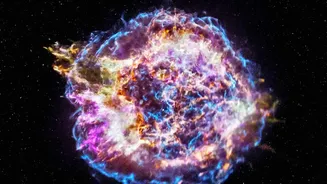
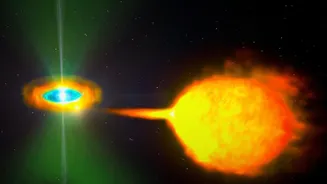
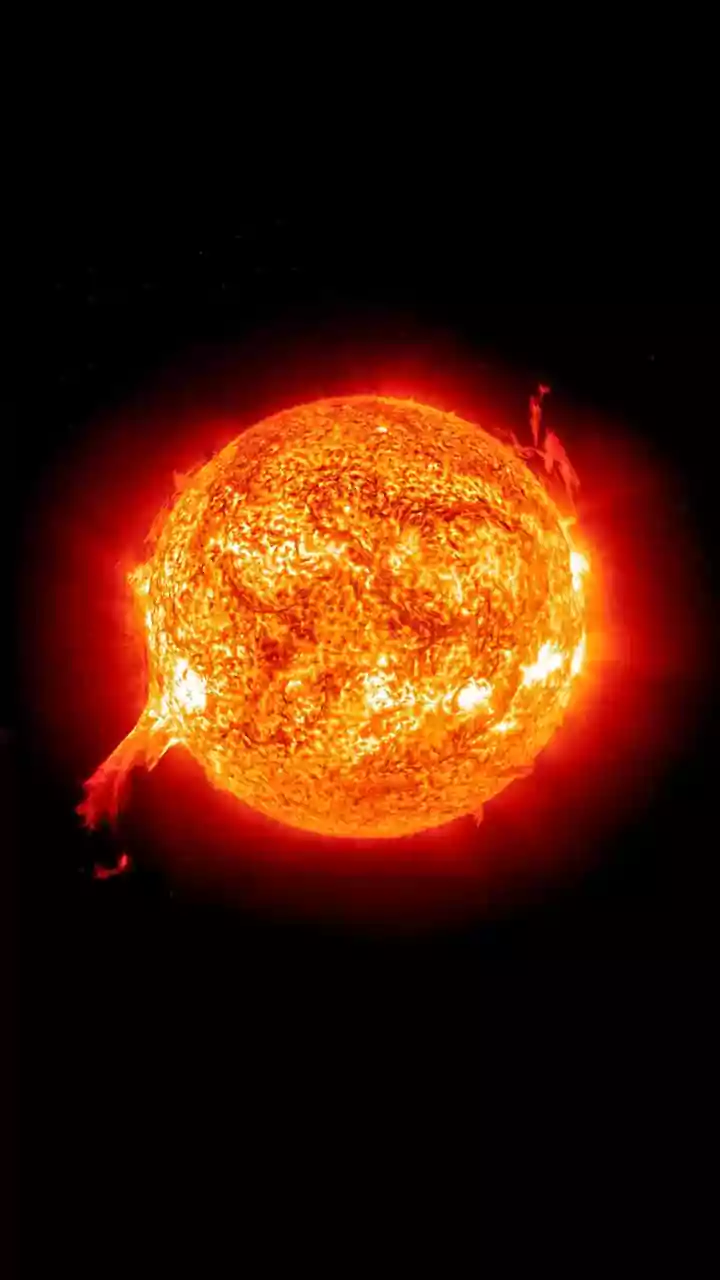
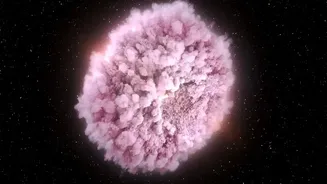
For a star many times more massive than our sun, its life ends when it runs out of nuclear fuel. Without the outward pressure from fusion, gravity wins. The star's core collapses in on itself in a fraction of a second, creating unimaginably high pressures and temperatures. This collapse can trigger a violent rebound, a shockwave that blasts the star's outer layers into space in a brilliant supernova, leaving behind a dense object called a neutron star. But sometimes, the shockwave fails. The star's gravity is too immense, and the entire mass collapses into a black hole. For decades, astrophysicists have used complex computer simulations to figure out what determines this outcome.
A New Quantum Wrinkle
Recent computer modelling has introduced a crucial new factor into these simulations: neutrino oscillations. Neutrinos come in three types, or 'flavors'—electron, muon, and tau. As they travel, they can spontaneously change from one flavor to another in a process called oscillation. For a long time, it was assumed this flavor-switching was a minor detail that wouldn't affect the overall outcome of a star's collapse. However, new research published in the journal Physical Review D shows this may not be the case. Scientists from the University of Copenhagen ran 195 simulations of collapsing stars, ranging from 9 to 120 times the mass of the Sun. They found that including neutrino oscillations in their models could dramatically change the star's fate.
Flipping the Cosmic Coin
The results of the new simulations are striking. The study found that for stars in a specific mass range, particularly those between 16 and 30 times the mass of our sun, including neutrino oscillations often flipped the outcome. Stars that were predicted to explode successfully as supernovae in older models would instead fail and collapse into black holes when this quantum effect was taken into account. This happens because different neutrino flavors interact with the stellar matter in slightly different ways. As they oscillate, they can alter how energy is deposited in the material surrounding the core, potentially weakening the shockwave that is supposed to trigger the supernova explosion. This discovery could help explain a long-standing cosmic mystery: why astronomers observe fewer supernovae in the universe than theoretical models have predicted.