





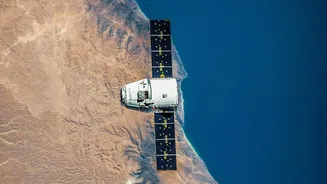
The First Uncrewed Flight: G1
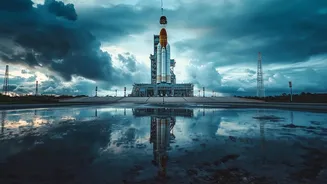
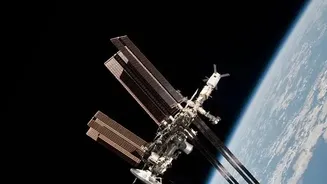
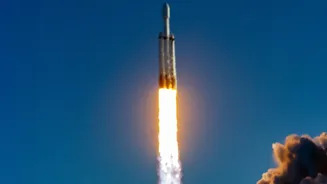
The immediate focus is on the G1 mission, the first of several uncrewed test flights. ISRO Chairman V Narayanan confirmed that the agency is pushing for this launch by the end of 2026. This flight will send the Gaganyaan spacecraft into a low Earth orbit
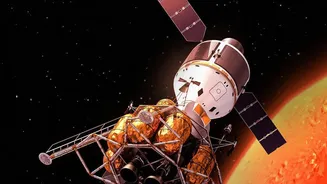
to validate its systems without a crew on board. It will test the performance of the human-rated LVM3 rocket, the life support systems, and the re-entry and recovery procedures. The spacecraft will even carry a humanoid robot named Vyommitra to simulate an astronaut's presence and gather crucial data on how the cabin environment affects a human body. This initial flight is the culmination of thousands of ground tests and is designed to ensure that every system is ready before humans step aboard.
Safety Above All Else
When you're sending people 400 km above the Earth, safety is the absolute priority. A key component tested in earlier flights, like the TV-D1 mission in October 2023, was the Crew Escape System (CES). This system is designed to act like an ejection seat, pulling the crew module away from the rocket in case of an emergency during launch. The successful validation of the CES was a major milestone, proving that the astronauts could be safely jettisoned from a failing rocket. The entire programme is built around this philosophy of redundant safety checks, with multiple uncrewed flights planned to ensure every potential issue is identified and solved long before the first manned mission.
Gateway to an Elite Club
Successfully launching a crewed mission will make India only the fourth country in the world to achieve independent human spaceflight capability, after the Soviet Union (now Russia), the United States, and China. This achievement is a powerful statement of the nation's scientific and technological prowess. The Gaganyaan programme aims to send a crew of three astronauts on a mission for up to three days. The four astronaut-designates, all decorated Indian Air Force pilots, have been undergoing extensive training for this historic flight. This mission is not just about planting a flag; it's about demonstrating a level of technical self-reliance that has major geopolitical significance.
More Than Just National Pride
While the mission is a source of immense national pride, its benefits are far more tangible. The Gaganyaan programme is expected to create around 15,000 new employment opportunities and will source a significant portion of its equipment from India's private sector, boosting industrial capabilities. It will also provide a unique platform for scientific research in areas like biology and material science in a microgravity environment. Furthermore, an ambitious, high-profile mission like Gaganyaan has the power to inspire an entire generation of young people to pursue careers in science, technology, engineering, and mathematics (STEM), strengthening the country's future.
The Road Ahead After the First Flight
The first uncrewed flight is a beginning, not an end. ISRO plans for at least two more uncrewed missions following G1 to systematically test and re-test all systems. These flights will build confidence and provide invaluable data, paving the way for the first crewed flight, which is now anticipated for 2027. Each mission builds upon the last, incrementally proving the reliability of the hardware and operational procedures. The successful completion of these test phases is non-negotiable. Only after ISRO is fully satisfied with the performance and safety of the entire system will it give the green light to send Indian 'Vyomnauts' into orbit, marking a new era for the nation's space programme.