




The Promise of an Eye in the Sky
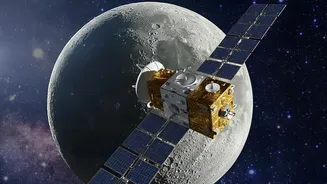
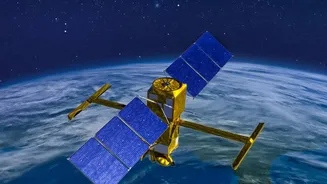
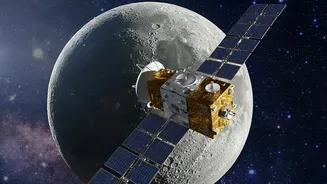
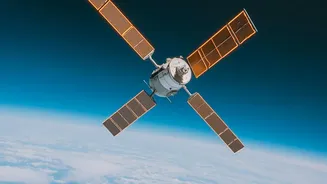
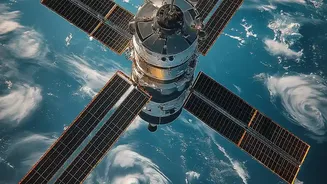
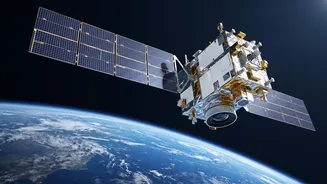
The original mission, involving a satellite named EOS-03 (also known as GISAT-1), was one of ISRO's most ambitious. The plan was to place a state-of-the-art imaging satellite into a geosynchronous orbit (GEO) approximately 36,000 kilometres above the Earth.
Unlike satellites in Low Earth Orbit (LEO) that pass over a location only periodically, a GEO satellite remains seemingly fixed over a single region. This would have given India the ability to continuously monitor the subcontinent, a game-changer for disaster management, agriculture, and national security. Imagine tracking a cyclone's development in real-time, monitoring floods as they happen, or observing vast forested areas for fires—all from a single, unblinking eye in the sky. This was the capability that EOS-03 was meant to deliver.
The Failure That Shook the Nation
On August 12, 2021, the nation watched as the Geosynchronous Satellite Launch Vehicle (GSLV-F10) lifted off from Sriharikota carrying the precious EOS-03 satellite. The initial stages of the launch performed perfectly, soaring into the sky as planned. But then, disaster struck. The crucial third stage, the Cryogenic Upper Stage, failed to ignite due to a technical anomaly. The mission could not be completed, and the satellite was lost. The failure was a significant setback. A Failure Analysis Committee later determined the cause was a pressure loss in the liquid hydrogen tank, which prevented the engine from firing. For a program as vital as this, the loss was more than just a piece of hardware; it was a loss of momentum and a critical strategic capability.
Why the Setback Still Matters
A failure in space exploration is never just a failure; it is a harsh but invaluable teacher. The loss of EOS-03 forced a period of introspection and rigorous re-evaluation within ISRO. The GSLV rocket, sometimes called the 'naughty boy' for its early troubles, is essential for India's heavier and more ambitious missions, including the Gaganyaan human spaceflight program. Ensuring its reliability is paramount. The 2021 incident, along with subsequent launch difficulties in 2025 and early 2026, highlighted vulnerabilities and prompted a months-long pause in launch activities as engineers went back to the drawing board. This intense focus on identifying and fixing the root causes of failures is what truly makes EOS-05's story significant. The program's legacy is tied not to the satellite that was lost, but to the lessons that ensured the next one would succeed.
The Main Question Now: A Resilient Return
After a long pause, the answer to the main question of how ISRO would recover came on September 4, 2026, with the successful launch of EOS-05. This satellite is the replacement for the one lost in 2021, designed to finally fulfill the original mission. Launched aboard the GSLV-F17, EOS-05 is now India's first imaging satellite to operate from a geosynchronous orbit, restoring ISRO's morale and placing a crucial asset in the sky. It carries advanced multispectral and hyperspectral imaging instruments to provide near-real-time data for disaster management, weather tracking, and security surveillance. However, the five-year gap between the failure and the replacement raises a new question: how can India accelerate its capacity to replace critical space assets in the future? While the success is a major milestone, ensuring a more resilient and responsive satellite architecture is the next great challenge.