




A New Window on the Cosmos
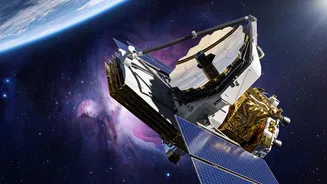
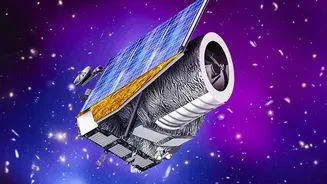
PRIMA, which stands for the PRobe far-Infrared Mission for Astrophysics, is NASA's next major observatory, designed to answer fundamental questions about our universe. Its primary goal is to study the cosmos in far-infrared light, a spectrum that is largely
invisible to other telescopes, including the famed James Webb Space Telescope (JWST). This unique capability will allow scientists to see through cosmic dust clouds that obscure the view at other wavelengths. The mission aims to tackle some of the biggest mysteries in astronomy: how planets form around distant stars, how galaxies and their central supermassive black holes grow together, and how the essential building blocks of life, like water, came to be.
What 'Phase B' Actually Means
Announcing that PRIMA has advanced to 'Phase B' might sound like technical jargon, but it's a critical milestone in any NASA project. Think of it as moving from a rough concept to a detailed blueprint. In this phase, engineers will finalize the preliminary design and ensure the necessary technology is ready for construction. It's a period of intense review where the mission's technical plans, schedule, and costs are scrutinized. Successfully completing Phase B is the final step before the mission gets the official green light, or 'confirmation', to proceed to Phase C, which involves the final design and fabrication of the telescope and its instruments. This advancement shows that NASA is confident in the mission's scientific goals and its feasibility.
The $1.2 Billion Balancing Act
Alongside the good news of its advancement, NASA also announced a firm cost cap of $1.2 billion for the PRIMA project. This figure does not include the cost of launching the telescope into space. In the world of ambitious space missions, this is a significant move toward fiscal discipline. For comparison, the James Webb Space Telescope's cost ultimately ballooned to around $10 billion. The $1.2 billion cap signals a new approach for NASA with its 'Probe-class' missions—ambitious, high-impact science projects that are developed with a stricter budget to ensure they are delivered on time and on budget. This cap forces the project team to make smart, efficient choices in the design and development stages, balancing cutting-edge science with responsible spending. PRIMA was selected for this development phase over another proposal, the Advanced X-ray Imaging Satellite (AXIS), partly because of its feasible development plan within cost and schedule constraints.
Bridging the Gap in Our Cosmic View
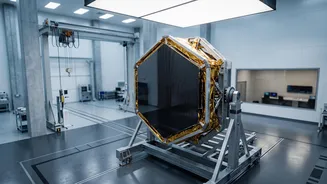
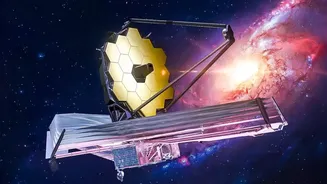
So, what will PRIMA show us that other telescopes can't? It's all about the wavelength. PRIMA is designed to fill a crucial observational gap between what the JWST can see in the near- and mid-infrared and what radio telescopes like ALMA observe at longer wavelengths. Many of the key processes PRIMA will study, such as the formation of water in the disks where planets are born, emit light only in the far-infrared. This means that even with the power of Webb, we are currently missing a huge piece of the puzzle. PRIMA, with its 1.8-meter cryogenically cooled telescope, will be able to detect this faint light, giving us our first clear look at the earliest stages of planet formation and galaxy evolution.
What Comes Next for PRIMA
With the move into Phase B, the PRIMA team at NASA's Jet Propulsion Laboratory and other partner institutions will spend the next couple of years refining their designs and technology. The mission will face a rigorous confirmation review to prove it can meet its goals within the $1.2 billion budget. If it passes this critical hurdle, the team will begin building the actual hardware. The current timeline targets a launch no earlier than 2033 for a planned five-year mission to survey the sky. For astronomers and anyone curious about the origins of our universe, the journey of PRIMA is now one to watch closely. It represents not just a quest for new knowledge but also a smarter, more sustainable way of exploring the cosmos.