



Reine, Norway: A Dramatic Fishing Village
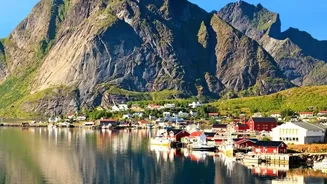
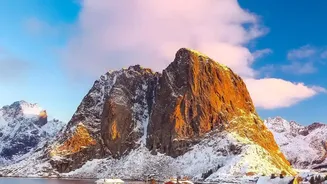
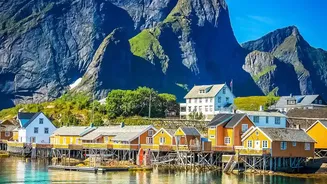
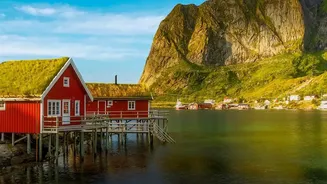
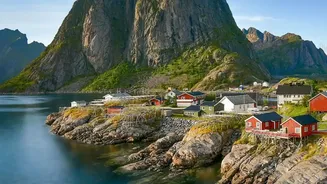
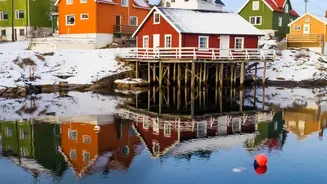
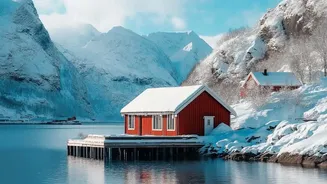
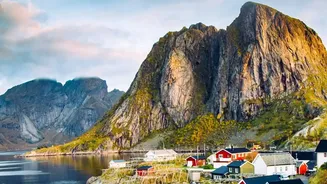
Tucked away in the spectacular Lofoten archipelago, Reine is a fishing village that seems to defy reality. Sharp, snow-dusted granite peaks rise directly from the sea, cradling a cluster of iconic red fishermen's cabins, known as 'rorbuer', that dot the shoreline.
This is not just a pretty picture; it's a living village where the culture is deeply connected to the sea. The air smells of salt and the rhythm of life is dictated by the tides. For centuries, fishing has been the lifeblood of this community, a heritage that is palpable as you walk along the harbour. Exploring the fjord by kayak offers a unique perspective of the towering landscape and provides a sense of the isolation and beauty that has shaped life here for generations.
Visby, Sweden: A Medieval Masterpiece
Step back in time in Visby, a UNESCO World Heritage site on the island of Gotland. Nicknamed the 'city of roses and ruins', Visby is the best-preserved medieval Hanseatic city in Scandinavia. Its most striking feature is the 3.4-kilometre-long stone wall, complete with towers and gates, that still encircles the old town. Inside, a labyrinth of cobbled streets winds past merchant houses and the hauntingly beautiful ruins of over a dozen medieval churches. During its 13th-century golden age as a trading hub, German, Russian, and Danish merchants all left their mark. This rich, cosmopolitan history created a unique cultural melting pot that is still felt today, especially during the annual Medieval Week when the city truly comes alive with markets and festivities.
Ærøskøbing, Denmark: A Fairytale Town
Often called the 'Fairytale Town', Ærøskøbing on the island of Ærø is a perfectly preserved 18th-century settlement. Its narrow cobblestone streets are lined with small, colourful houses with climbing hollyhocks and intricately carved doors. The town's idyll is so complete that conservation orders protect most of its buildings, helping it retain an atmosphere that feels centuries away from modern life. The culture here is slow and gentle, centred around the harbour where fishing boats and wooden sailing ships bob in the water. It’s a place that invites you to wander without a plan, admire the unique architecture, and experience the Danish concept of 'hygge' in one of its most authentic settings.
Porvoo, Finland: A Riverside Canvas
Just a short trip from Helsinki, Porvoo is Finland's second-oldest town and a testament to its enduring history. It is most famous for its iconic red-ochre riverside warehouses lining the Porvoonjoki River, a view that has become one of Finland's national landscapes. The Old Town, or 'Vanha Porvoo', is a charming maze of cobbled streets, colourful wooden houses, and small, quirky boutiques. Porvoo was an important trading centre in the Middle Ages, and its historic cathedral played a significant role in Finland's journey toward autonomy. Today, the town is a vibrant cultural hub, blending its rich history with a thriving arts scene and a reputation for excellent cafes and restaurants.
Seyðisfjörður, Iceland: An Artistic Fjord
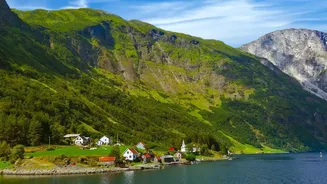
Nestled at the end of a long fjord in East Iceland, Seyðisfjörður is a remote town with a surprisingly massive creative pulse. Surrounded on all sides by mountains streaked with waterfalls, the town is known for its community of artists, drawn in part by the legacy of German-Swiss artist Dieter Roth, who had a studio here. This artistic spirit is visible everywhere, from the colourful and well-preserved wooden houses to the Skaftfell Center for Visual Art. The town’s most iconic sight is the pale blue church at the end of a rainbow-painted street, a vibrant symbol of the town's welcoming and creative identity. This is a place where nature's dramatic beauty fuels a thriving, modern cultural scene.