





A New Blueprint for Learning
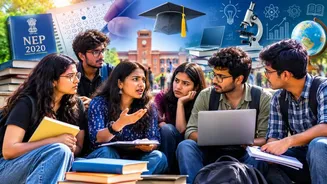
In response to the growing demand for skilled professionals in the electronics manufacturing sector, IIT Madras has launched a Bachelor of Science (BS) in Electronic Systems. Unlike traditional on-campus degrees, this program is delivered in a flexible,
hybrid format. Coursework is provided online, allowing students to learn at their own pace, while lab work, quizzes, and exams are conducted in person to maintain academic rigour. The curriculum, designed in collaboration with industry experts, focuses on areas like embedded systems, signal processing, and IoT. This initiative is part of a broader push by IIT Madras to offer several new programs that integrate strong theoretical foundations with practical, industry-relevant applications in high-impact sectors.
Bridging the Theory-Practice Gap
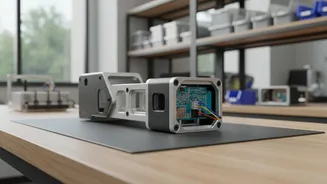
The core philosophy of the BS in Electronic Systems program is to bridge the gap between knowing and doing. A significant part of the curriculum involves hands-on, application-oriented projects. For instance, the 'Electronic Systems Project' is a two-month-long course where students work in teams on real-world problems under the guidance of IIT Madras faculty. This approach directly addresses a long-standing criticism of Indian technical education: that it produces graduates with plenty of theoretical knowledge but limited practical skills. By emphasizing project planning, hardware-software co-design, and debugging, the program aims to develop not just technical depth but also crucial skills like teamwork and project management, making graduates more prepared for the demands of the job market.
In Defence of Deep Theory
However, the push for practical skills has sparked a debate about the enduring value of a strong theoretical foundation. Proponents argue that theory is what separates a coder from a computer scientist and an engineer from a technician. Theoretical knowledge provides the “why” behind the “how,” enabling professionals to solve complex problems from first principles rather than just applying known solutions. Understanding concepts like algorithms, data structures, and computational complexity is crucial for innovation and building efficient, scalable, and secure systems. Without this grounding, engineers risk being unprepared for new challenges and may struggle to adapt as technologies evolve. History is filled with engineering failures, from the Tacoma Narrows Bridge to the Ariane 5 rocket, that underscore the catastrophic consequences of overlooking theoretical principles.
What the Industry Demands
The industry's perspective is clear and urgent. For years, organizations like NASSCOM have highlighted an “employability gap,” pointing out that a large percentage of engineering graduates are not ready for the workplace. While overall employability among Indian graduates has been rising, the demand for specialized skills in areas like AI/ML, cloud computing, and data science is intensifying. Companies are shifting from mass hiring to recruiting smaller numbers of highly skilled individuals. A recent NASSCOM report even warned that the rise of AI could automate routine tasks, making it harder for junior engineers to build foundational knowledge. This puts the onus on academia to produce graduates who can perform from day one, possessing not just technical know-how but also the problem-solving and communication skills that hands-on projects help to cultivate.
Finding a Sustainable Balance
Ultimately, the debate isn't about choosing theory or practice, but about finding the optimal balance. An ideal curriculum would impart theoretical knowledge that serves as a strong foundation, while simultaneously providing ample opportunity for practical application. Education shouldn't be a choice between understanding the principles of physics and being able to build a bridge; it must be about doing both. Programs like IIT Madras’s BS in Electronic Systems are a significant step in this direction. They represent a move away from rote learning and toward an experiential model that mirrors the challenges of the real world. This hybrid approach, combining rigorous fundamentals with project-based learning, could well be the template for the future of technical education in India.