






The Brain’s Malleable Filing Cabinet
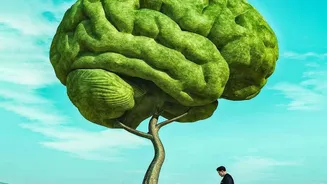
For decades, the prevailing metaphor for memory was a library or a computer hard drive, where experiences were stored as fixed, unchanging files. You simply had to find the right one and pull it up. However, recent neuroscience has turned this idea on its
head. The focus is now on a process called 'memory reconsolidation'. This theory suggests that whenever we retrieve a memory, it doesn't just get 'read'; it becomes temporarily unstable and fragile. During this brief window, the memory is vulnerable to alteration before it gets stored again, or 'reconsolidated'. This means new information, emotions, or even simple suggestions can become woven into the original fabric of the memory, changing it for good. It’s not that we’re being dishonest; our brains are simply designed to update past information with new context, which is an adaptive trait that can unfortunately lead to inaccuracies.
How False Memories Are Born
This malleability is why the accuracy of memory is under such intense scrutiny. Scientists like Dr. Elizabeth Loftus have famously demonstrated how easily false memories can be created. In numerous studies, researchers have successfully made people 'remember' events that never happened, from being lost in a shopping mall as a child to seeing a yield sign where there was a stop sign. This can be done through leading questions or by exposing someone to another person's mistaken account of an event. This isn't a sign of a faulty brain; it's a byproduct of how our memory system naturally works by linking related concepts. Experiments show that if you give someone a list of related words like 'bed', 'rest', and 'dream', they are highly likely to falsely remember hearing the word 'sleep'. The same brain regions, including the hippocampus, light up for both true and false memories, making them feel indistinguishable.
From the Lab to the Courtroom
The real-world implications of this research are enormous, particularly within the legal system. Eyewitness testimony, long considered a cornerstone of criminal justice, is now viewed with much greater caution. Research has shown that a witness's confidence in their memory is often a poor indicator of its actual accuracy. In fact, studies of exonerated individuals have found that mistaken eyewitness identification was a factor in a majority of wrongful convictions. The act of being questioned by police, discussing the event with others, or seeing a suspect in a lineup can all unintentionally alter an eyewitness's original memory. As a result of this growing body of research, some legal jurisdictions are beginning to change their procedures, educating jurors that memory is not like a video recording and can be easily distorted.
A Therapeutic Frontier
While the fallibility of memory presents challenges, the science of reconsolidation also opens up exciting therapeutic possibilities. If memories can be changed, it might be possible to update maladaptive ones, like those at the heart of post-traumatic stress disorder (PTSD). Researchers are exploring whether they can reactivate a traumatic memory in a safe, controlled setting and then introduce new information or use medication to dampen its emotional power before it's reconsolidated. Studies in animals have already shown that stimulating or suppressing certain parts of the hippocampus can reduce the fear associated with a negative memory. The goal isn't to erase the memory entirely, but to strip it of its debilitating emotional charge, turning a terrifying flashback into a manageable narrative of a past event. This work is still in its early stages, but it offers a new frontier for treating conditions rooted in distressing memories. Of course, this power raises profound ethical questions about identity and consent, which society will need to confront as the science advances.