








A Costly Lesson in Automation
For years, the promise of artificial intelligence in manufacturing has been a siren song for automakers. The vision was one of flawless, automated quality control systems catching defects before they happen, reducing costs and boosting efficiency. Ford,
like many others, invested in this vision. However, the company discovered a hard truth: AI alone wasn't enough. After relying heavily on automated systems, Ford faced a wave of costly vehicle defects and recalls. Chief Operating Officer Kumar Galhotra admitted the company had depended more and more on these systems without achieving the desired results. The issue wasn't that the technology failed, but that it lacked the crucial context and nuanced judgment of seasoned professionals. Ford's Vice President of Vehicle Hardware Engineering, Charles Poon, said the company mistakenly thought introducing AI with design requirements would automatically yield a high-quality product.
The 'Gray Beard' Engineers Return
In a strategic U-turn, Ford initiated a talent reset. Over the last three years, the automaker has hired or rehired roughly 350 veteran technical specialists—internally nicknamed “Gray Beard” engineers—to steer its quality control efforts. The company realized that when its most experienced engineers retired, their decades of institutional knowledge disappeared, leaving the AI systems without the rich data needed to identify complex or unusual flaws. These returning experts were tasked not just with fixing problems, but with fundamentally changing the system. They now lead mandatory design reviews, mentor younger staff, and, most importantly, help retrain Ford's AI tools. This hybrid approach ensures that the AI learns from real-world, hands-on experience, transforming it from a flawed inspector into a powerful assistant.
From Fixing to Preventing
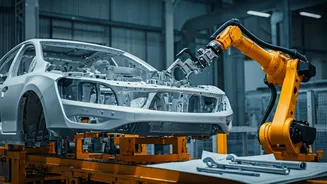
The core of the new strategy is a shift from a “find-and-fix” mentality to one of prevention. By embedding these veteran engineers at the start of the design and development process, Ford aims to hunt for failure points long before a part ever reaches the factory floor. This involves closer collaboration between engineering, manufacturing, and supply chain teams to catch issues where they often originate—at the intersection of different departments. On the factory floor, this human-guided AI is already making a difference. Systems like AiTriz and MAIVS use cameras and machine learning to verify that correct parts are installed properly in real-time. Instead of waiting until a vehicle reaches the end of the line for inspection, operators can now identify and correct issues instantly, saving significant time and rework costs.
The Results Speak for Themselves
This human-centric reset is delivering tangible results. CEO Jim Farley confirmed the initiative has already slashed warranty and recall expenses, contributing to hundreds of millions of dollars in cost savings. The improvements are also being recognized externally. In J.D. Power's 2026 U.S. Initial Quality Study, Ford secured the top spot among mass-market brands for the first time in 16 years, a significant jump in its quality rankings. Three of its flagship models—the F-150, Super Duty, and Mustang—topped their respective categories in the survey. While the company still faces challenges with recalls from vehicles built during its previous AI-centric era, the turnaround in initial quality for new models signals that the new philosophy is working.