


Reading a Galaxy's Fossil Record
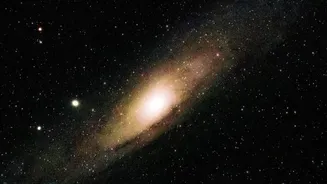
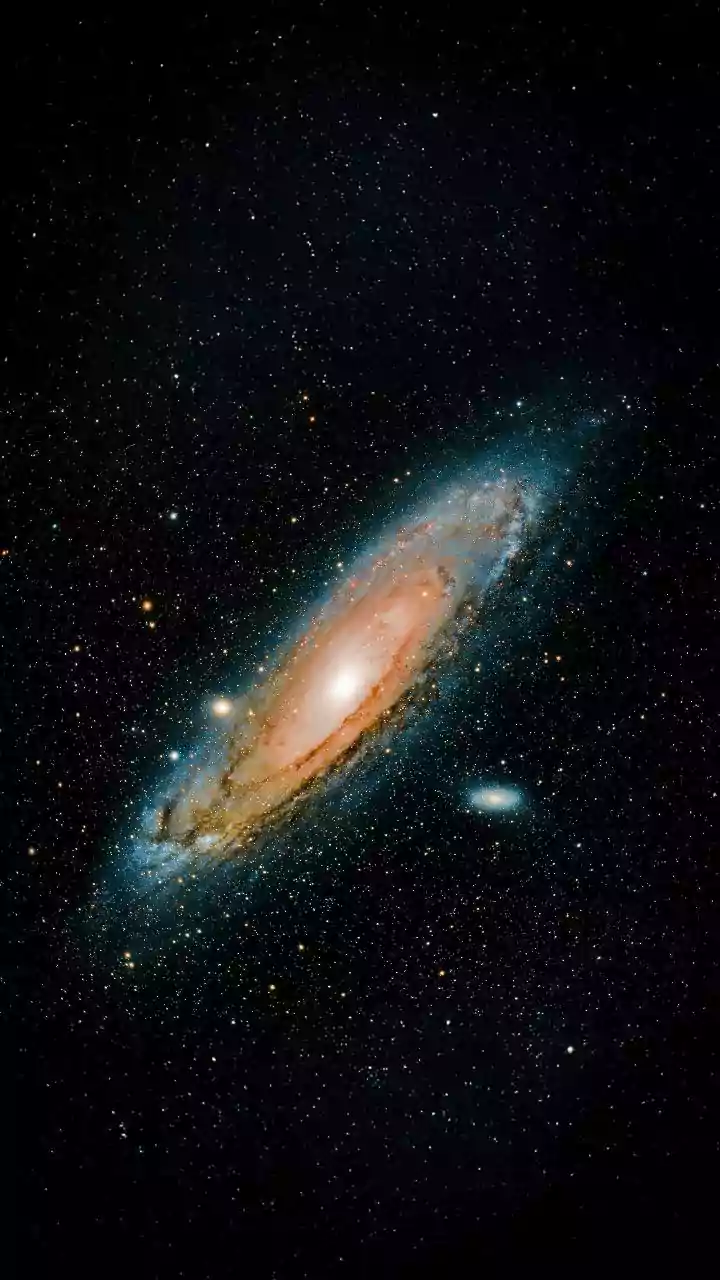
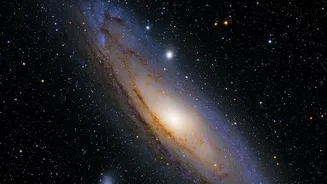
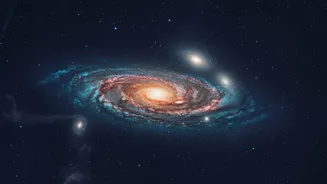
Imagine trying to understand the history of a forest by looking at every single tree. That's essentially what astronomers have just done for the Andromeda galaxy. Located 2.5 million light-years away, Andromeda is the closest major spiral galaxy to our
own Milky Way, making it a perfect natural laboratory. Because we are inside the Milky Way, we can never get a full, outside view of our own galactic home. Andromeda offers the next best thing. Using a combination of two massive surveys from the Hubble Space Telescope, a team of astronomers meticulously mapped two-thirds of Andromeda's sprawling disk. The project resolved an astonishing 200 million individual stars, treating them like a 'fossil record' of the galaxy's life.
How Stars Tell Time
A star's color and brightness are clues to its age. Massive, brilliant blue stars burn through their fuel rapidly, living fast and dying young within just a few million years. Their presence signals very recent star birth. Smaller, redder stars, like our own Sun, are more frugal with their energy and can shine for billions of years. By analyzing the mix of blue and red stars across thousands of distinct regions in Andromeda, scientists were able to rewind the clock. This technique allowed them to build a detailed, high-resolution timeline of when and where the galaxy was most active in creating new stars.
The Great Slowdown
The findings, published in The Astrophysical Journal, paint a picture of a galaxy that is slowly settling into a quieter phase. About 2 billion years ago, Andromeda experienced a massive boom in star formation, likely triggered by a collision with another, smaller galaxy. But the new study reveals what happened next. Over the last 500 million years, the star-making party has been winding down. Five hundred million years ago, Andromeda was churning out new stars at a rate of about one solar mass per year—roughly the same as the Milky Way does today. By 40 million years ago, that rate had been cut in half. Today, it has plummeted to just one-fifth of a solar mass per year, indicating a significant and prolonged slowdown.
A Prime Suspect for the Slowdown
So, what's causing Andromeda to lose its creative spark? The researchers found that much of the decline is happening in a giant, dusty ring of gas about 32,000 light-years from the galactic center, which has historically been a major hub of star birth. Rather than running out of fuel, the galaxy seems to be naturally calming down after its earlier frenzy. However, there may be another factor at play. Astronomers are eyeing Andromeda's small satellite galaxy, M32, as a potential disrupter. The region of Andromeda's disk closest to M32 showed a distinct drop in star formation that began around 60 million years ago. While the timing doesn't perfectly match all theories, researchers call M32 the 'most likely suspect' for this localized dip in activity, though they can't yet prove the connection.
A Glimpse of Our Own Future?
Studying Andromeda's life story is not just an academic exercise; it provides critical context for understanding our own place in the cosmos. By observing the complex history of booms, mergers, and slowdowns in our galactic neighbor, we learn more about the life cycles of spiral galaxies in general. This detailed history of Andromeda, from its violent past to its increasingly quiet present, serves as a model for what might have happened in our own galaxy's past or what could happen in its future. It reminds us that galaxies are not static, unchanging islands of stars, but dynamic, evolving systems with unique and dramatic stories written in the light of their stars.