




Start with a Stiff Dough
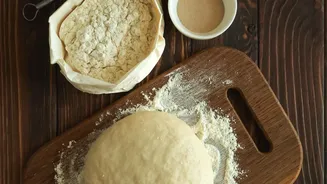
The foundation of a great poori is the dough. Unlike the soft, pliable dough for rotis or chapatis, poori dough must be firm and stiff. This is crucial for two reasons: a firm dough prevents the poori from absorbing too much oil, and it provides the structure
needed to puff up dramatically during frying. To prepare it, combine whole wheat flour (atta) with a pinch of salt. Some recipes suggest adding a small amount of fine semolina (sooji or rava), which helps create a crispier texture and allows the poori to hold its puffed shape for longer. When adding water, do so gradually, mixing until you have a tight dough that is smooth but not soft. Knead for a few minutes, then let it rest for a short period—about 10 to 20 minutes is ideal. This brief rest allows the gluten to relax, making the dough easier to roll without becoming too elastic. However, don't let it rest for too long, as an over-rested dough can become loose and soak up more oil.
Roll with Oil, Not Flour
Once your dough has rested, divide it into small, equal-sized balls. When it’s time to roll, resist the urge to use dry flour for dusting, as you would for rotis. Instead, lightly grease each dough ball and your rolling surface with a little oil. This small change has a big impact. Using dry flour causes loose particles to burn in the hot frying oil, creating unpleasant dark specks and a bitter taste. Oiling the dough prevents sticking while keeping your frying oil clean throughout the process. Roll each ball into an even circle, about 1-2 mm thick. Consistency is key; if the poori is too thin, it won't have enough structure to puff and may turn hard like a papad. If it's too thick, it won't cook through properly in the centre.
The Safe Slide: Frying with Finesse
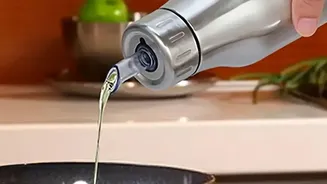
This is the moment where technique truly matters. The oil must be hot enough; a good test is to drop a tiny piece of dough into the kadhai. If it sizzles and rises to the surface immediately, the oil is ready. If it sinks or browns too quickly, the temperature is off. Now, for the crucial step: instead of dropping the rolled poori flat into the pan, which can cause hot oil to splash dangerously, hold it by the edge and gently slide it into the oil from the side of the kadhai. This controlled entry is safer and more effective. As soon as the poori floats to the top, use a slotted spoon (jharan) to gently press it down into the oil. This gentle pressure is what encourages the poori to inflate. Some cooks also recommend pouring hot oil over the top of the poori as it fries to help it puff evenly.
Quick Frying for Perfect Results
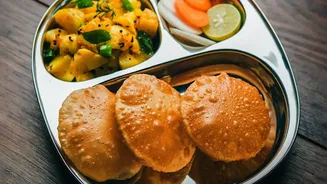
A common mistake is frying pooris for too long. Each poori should only take about 20-30 seconds to cook. Once it has puffed up, flip it carefully and fry for another 10-20 seconds on the other side until it’s a light golden brown. Frying at the correct medium-high temperature ensures the poori cooks quickly from the outside, creating a seal that traps steam inside. It is this trapped steam that causes the poori to puff into a perfect sphere. If the oil is not hot enough, the poori will sit in the oil for too long and absorb grease. If the oil is too hot, it will burn on the outside before cooking through. Also, avoid overcrowding the pan; fry one or two pooris at a time to maintain a stable oil temperature. Once cooked, remove the poori with a slotted spoon, allowing excess oil to drain back into the pan before placing it on a paper towel.