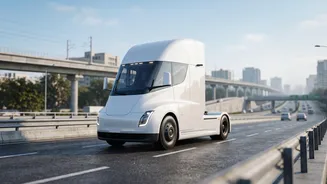









The familiar sight of an Amazon delivery is getting a quiet, green makeover. A landmark partnership between Tata Motors and Amazon is putting thousands of electric trucks on India's roads, starting with Delhi, in a major push to decarbonise e-commerce.
A Major Push Into Electric Freight
Amazon and Tata Motors have formally announced a collaboration to deploy 3,000 electric trucks across Amazon's vast Indian transportation network. This move represents the single largest electric truck deployment by any e-commerce company in India and signals a significant shift from electrifying last-mile delivery scooters and vans to tackling the more challenging middle-mile logistics. The first batch of these vehicles, specifically the Tata Ultra E.7 model, was flagged off in Delhi to coincide with the peak festive season demand. While Tata Motors will supply the trucks, they will be owned and operated by Amazon's carrier partners, a model that allows for rapid scaling without placing the assets directly on Amazon's books.
Beyond the Last Mile
Until now, the focus of EV adoption in logistics has been on the 'last mile'—the final journey from a local hub to a customer's doorstep. This new initiative targets the 'middle mile', which involves moving goods between larger facilities, such as from a warehouse to a city sorting centre. This segment is considered harder to decarbonise due to heavier payloads and longer operational hours. The collaboration aims to prove that electric trucking is commercially viable for large-scale freight operations, moving it beyond pilot programmes. Amazon already has a fleet of over 15,000 EVs in more than 500 cities, and this new phase extends its green ambitions into the core of its supply chain.
Tata's Strategic EV Leadership
For Tata Motors, India's largest commercial vehicle manufacturer, this deal solidifies its leadership in the country's burgeoning EV market. The company has been aggressively expanding its electric portfolio, and this high-profile partnership with a global giant like Amazon provides both a massive order book and a real-world showcase for its technology. The Tata Ultra E.7 truck features CCS2 fast charging and regenerative braking, features designed to address practical concerns like charging speed and vehicle efficiency that can slow commercial adoption. This deal demonstrates sustained demand for India-made electric trucks, a key goal for the government's 'Viksit Bharat 2047' vision.
Why Delhi Is the Ideal Launchpad
Starting the rollout in Delhi is a strategic choice influenced by both policy and necessity. The city's ongoing battle with air pollution has led to progressive EV policies. A key incentive in Delhi's 2026 EV Policy grants the first 1,000 registered medium-duty electric trucks decade-long exemption from the 'No Entry' hours that restrict diesel truck movement during the day. This gives early adopters like Amazon's partners a significant operational advantage, allowing for more efficient, round-the-clock logistics. The festive season launch further capitalises on this, enabling smoother operations during a period of peak freight volume.
The Road Ahead: A National Corridor
The ambition of this partnership extends far beyond the capital. The next phase involves electrifying one of India's most critical freight arteries: the 2,800nd kilometre DelhindBengalurundChennai corridor along National Highway 48. This route connects seven states and six major endcommerce regions, making it a crucial test for the viability of longndhaul electric trucking. Success will depend heavily on the development of a robust charging infrastructure. To this end, Amazon is working with partners like Yahhvi to build a network of charging yards to support the fleet. This initiative is a clear sign that India's electric transition is accelerating from city streets to national highways.