





Master the 'Pancake' Technique
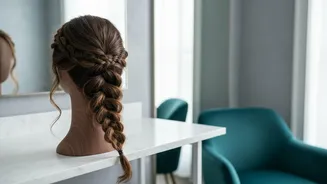
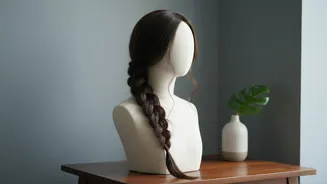
The secret to those effortlessly chic, voluminous braids you see online is a simple trick called “pancaking.” Once your fishtail braid is complete and secured, gently begin to pull at the outer loops of each section. Start from the top and work your way
down, tugging horizontally to widen the braid. Be gentle; the goal is to flatten and spread the sections, not pull them out completely. This technique instantly creates the illusion of thicker, fuller hair and gives the style a romantic, bohemian vibe. For best results, pull a little at a time on both sides to maintain symmetry. You can make it as subtly full or as dramatically wide as you like, transforming a tight, neat braid into a soft, statement look.
Build a Foundation of Texture
A great braid starts before the first strand is even crossed. Prepping your hair with the right product can make all the difference, especially if your hair is fine or silky and tends to slip. Before you begin braiding, spritz a texturizing spray or a sea salt spray from roots to ends to give your hair some grit and hold. If you want serious volume, you can also work a small amount of volumizing powder or dry shampoo into the roots and lengths. This preparation not only makes the hair easier to grip and braid but also ensures the finished style has a modern, piecey quality. The added texture will help your pancaked sections hold their shape and prevent the entire braid from loosening too much throughout the day.
Try an Inverted 'Dutch' Fishtail
If you want your braid to literally stand out, try reversing the direction of your weave. A standard fishtail involves crossing small sections from the outside over to the opposite side. A Dutch or inverted fishtail does the exact opposite: you cross the sections under the main body of the braid. This technique pushes the woven parts of the braid outward, creating a raised, 3D effect that is more pronounced and defined. It might take a moment to get the rhythm down if you're used to the standard method, but the result is a striking braid that sits on top of your hair rather than blending into it. This is especially effective for crown braids or styles where you want the braid pattern to be the main feature.
Play with Placement and Parting
Sometimes, the most impactful change has nothing to do with the braid itself, but where you place it. Instead of a standard braid down the back, experiment with different placements. A deep side part with a fishtail draped over the shoulder creates an instantly romantic and elegant look. For a more playful and youthful vibe, try twin fishtail braids. You could also begin the braid high on the head like a ponytail for a sporty feel, or create a fishtail crown by braiding two pigtails and pinning them across the top of your head. Don't be afraid to leave some pieces out. Pulling out a few face-framing tendrils can soften the look and create a more relaxed, effortless appearance.
Embrace the Deconstructed Look
A perfect, neat fishtail is beautiful, but a slightly messy, deconstructed braid has an undeniable cool factor. This look combines several of the techniques above for maximum impact. Start with textured hair, create your fishtail (either standard or Dutch), and then pancake it generously. But don't stop there. Use your fingers to gently rough up the braid a bit, allowing a few smaller strands to pop out. Pull out longer sections around your face and temples to frame your features. The idea is to make the style look lived-in and effortlessly chic. This approach works wonderfully for second-day hair, as the natural oils and texture provide the perfect base for a style that is meant to be perfectly imperfect.