





Your Starting Point for Strength
The push-up is a foundational bodyweight exercise, known for building impressive upper body and core strength. However, many people struggle to perform even one with proper form. This is where the wall push-up comes in. It's a modified version performed
standing, using a wall for support instead of the floor. By changing your body's angle, you dramatically reduce the amount of weight your arms have to lift, making it an accessible entry point for nearly anyone, regardless of their current fitness level. It’s not an 'easy' version; it’s the correct starting point to build the strength and form needed for more advanced variations.
The Benefits of Leaning In
The primary advantage of wall push-ups is their adjustability. The further your feet are from the wall, the more challenging the exercise becomes. This allows you to create a progressive overload that is gentle on your joints, particularly the wrists and shoulders, which are often strained by traditional push-ups. This exercise effectively targets the same primary muscles: the chest (pectorals), shoulders (deltoids), and the back of your arms (triceps). Furthermore, maintaining a straight, rigid posture from head to heels forces your core muscles to engage, improving your stability and posture over time.
How to Perform a Wall Push-Up Correctly
Proper form is crucial to maximise benefits and prevent injury. Follow these steps: 1. Stand facing a solid wall, about an arm's length away. Your feet should be shoulder-width apart on a non-slip surface. 2. Place your palms flat on the wall. Your hands should be at about shoulder or chest height, and slightly wider than your shoulders. 3. Engage your core and glutes to create a straight line from your head to your heels. Think of your body as a moving plank. 4. Inhale as you slowly bend your elbows, lowering your chest and face towards the wall. Keep your elbows from flaring out to the sides; they should be tucked in at roughly a 45-degree angle to your body. 5. Once your chest is close to the wall, exhale and push back firmly to the starting position, focusing on using your chest and arm muscles.
Common Mistakes to Avoid
A few common errors can reduce the effectiveness of the exercise or lead to strain. Be mindful of a sagging midsection; keep your core tight to prevent your hips from dropping. Avoid letting your head drop forward or jutting your chin out. Your neck should remain in a neutral position, aligned with your spine. Another frequent mistake is flaring your elbows out too wide. This places unnecessary stress on your shoulder joints. Finally, ensure you are completing the full range of motion, from arms extended to chest near the wall, to get the most out of every repetition.
How to Progress and Get Stronger
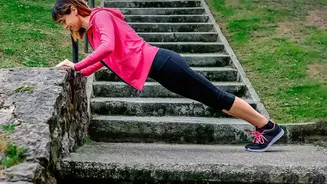
Once you can comfortably perform several sets of 15-20 wall push-ups with perfect form, it’s time to increase the challenge. The simplest way is to move your feet further back from the wall, which increases the incline and therefore the load on your muscles. When that becomes manageable, you can progress to incline push-ups on a sturdy, lower surface, like a kitchen counter, a strong table, or a bench. The lower the surface, the harder the exercise becomes. This gradual progression will safely and effectively build the strength required to eventually perform a full push-up on the floor, and perhaps even more advanced variations like one-arm push-ups in the future.