







Understanding the Global Scorecard
Every two years, the World Economic Forum (WEF), in collaboration with Zurich Insurance Group, releases its Travel & Tourism Development Index (TTDI). This isn't just a list of popular holiday spots. Instead, the TTDI is a comprehensive assessment of the factors
that enable the sustainable and resilient development of the travel sector in 110 economies. It evaluates everything from transport infrastructure and natural and cultural resources to safety, price competitiveness, and readiness for a digital future. Think of it as a country's report card for its tourism potential, not just its current visitor numbers. The 2026 report shows the industry is largely past its post-pandemic recovery phase, with international arrivals hitting a record 1.5 billion in 2025. The new challenge, the report argues, is managing this growth sustainably.
The 2026 Global Rankings
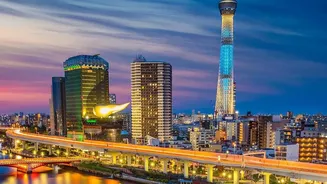
While emerging economies are gaining momentum, the top of the 2026 leaderboard is dominated by developed nations. Japan has claimed the top spot, followed by the United States, Spain, Australia, and France. Europe remains a powerhouse, holding six of the top ten positions. However, the real story lies in the rate of change. The latest index reveals that 92% of the ranked economies improved their scores between 2024 and 2026, the fastest pace of progress since 2019. This widespread improvement highlights a global push towards strengthening tourism infrastructure, enhancing cultural resources, and improving air connectivity. But the report also flags rising costs and workforce shortages as significant constraints on the sector's future.
Asia-Pacific: The Fastest-Improving Region
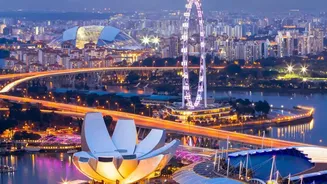
The Asia-Pacific region is the clear standout for momentum. It was the fastest-improving region between 2024 and 2026, with its average score increasing by 3.6%. In fact, seven of the ten most-improved economies in the entire index are from Asia-Pacific. This rapid ascent is attributed to significant gains in air transport infrastructure, a richer slate of cultural resources, and a strengthening environment for business travel. Countries like Vietnam and Laos have shown remarkable progress. India has also made a notable leap, climbing nine places to 31st overall. This surge reflects a broader trend of emerging economies improving their tourism fundamentals more than twice as fast as the top-ranked countries since 2019.
Middle East: A Story of Strategic Investment
The Middle East is also a major focus of the report, recording significant gains that underscore a long-term strategic vision for tourism. Saudi Arabia, for instance, climbed three places to rank 29th, a jump of 17 places since 2019. This progress is a direct result of the Kingdom's Vision 2030, which has set an ambitious target of attracting 150 million tourists annually by 2030 after already surpassing its initial 100 million goal in 2025. The UAE remains a mature and high-performing market, ranking 22nd globally. The entire region is benefiting from massive investments in infrastructure and a strategic shift from being just an aviation hub to becoming a destination in its own right, with a focus on experience design and purpose-led development. While some analyses point to potential short-term headwinds in 2026 due to regional conflict, the long-term growth forecast for Middle East tourism remains the strongest in the world.