




A Discovery in the Sands
The story of this discovery begins not in a high-tech lab, but on the beaches of Hiroshima Bay. For years, scientists have studied tiny, glass-like beads called 'hiroshimaites' found within the beach sand. These microscopic spherules, mostly just micrometres
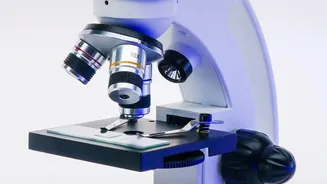
to millimetres wide, are the fallout debris from the atomic explosion. They formed when the bomb's fireball, which reached temperatures exceeding 7,000°C, vaporised buildings, soil, and metal. This cloud of superheated plasma then cooled rapidly as it rose and expanded, condensing into tiny droplets that rained down and were preserved for decades. It was inside one of these glassy beads that an international team of researchers, using powerful electron microscopes and X-ray diffraction, found a single, microscopic metallic grain with a structure unlike any known before.
What is the Hiroshima Alloy?
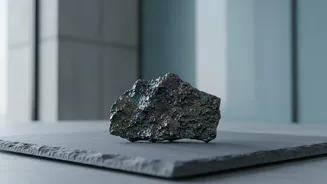
The newly identified material is a complex, multicomponent alloy. Chemical analysis revealed a unique mixture of elements, including iron, chromium, nickel, silicon, and traces of manganese, molybdenum, and aluminium. These were the building blocks of the city itself—steel from structures, aluminium from window frames, and silicon from concrete and soil—all fused together in an instant. What makes the alloy so unusual is not just its chemical cocktail, but its highly ordered atomic structure. Under normal conditions, such a complex mix of elements would be expected to form a simple, disordered structure. Instead, this alloy exhibits a unique and complex crystalline arrangement, a testament to the extraordinarily rapid cooling—or 'quenching'—that locked its atoms into a metastable phase before they could settle into a more common configuration.
A Laboratory of Extreme Conditions
The atomic blast over Hiroshima was a catastrophic event, but for materials scientists, it represents a 'giant accidental material-science laboratory'. The conditions inside the fireball—immense heat, extreme pressure, and ultrafast cooling—are nearly impossible to replicate sustainably and safely in a lab. The discovery of this alloy, along with similar findings like the quasicrystals found in the debris of the Trinity nuclear test site in New Mexico, confirms that such extreme events can create entirely new materials. These are not simply melted and reformed versions of existing materials; they are novel structures with unique properties. The study of these naturally-formed (albeit through man-made disaster) extreme-condition materials provides invaluable data that complements what can be achieved through deliberate synthesis.
Significance for Science and Technology
While this microscopic alloy is unlikely to be mined from beaches for industrial use, its discovery holds significant implications. It provides a real-world benchmark for how complex alloys behave under extreme duress. This knowledge is crucial for the field of materials science, which is constantly searching for new materials with superior properties like strength, heat resistance, and stability. By understanding the framework of the Hiroshima alloy, scientists can gain insights into designing new advanced materials for use in aerospace, energy, and electronics. Furthermore, the alloy serves as a high-resolution physical archive of the explosion itself. Its specific composition and structure can provide forensic clues about the precise conditions within the fireball, helping researchers refine models of nuclear events.