









The High-Flying Promise
Launched in 2016, the Ude Desh ka Aam Nagrik (UDAN) scheme was a revolutionary idea. Its goal was to make air travel affordable and accessible by connecting unserved and underserved airports in Tier-2 and Tier-3 cities. The model seemed simple: airlines
would bid for routes that were not commercially viable on their own. In return, they received government subsidies, known as Viability Gap Funding (VGF), for a period of three years to cover potential losses. This support, along with waivers on airport charges and lower taxes on fuel from state governments, was meant to kickstart regional aviation, boosting local economies, tourism, and creating a truly national air network. The dream was one of balanced regional growth, where a flight from a small town to a metro city was no longer a luxury.
An Epidemic of Grounded Routes
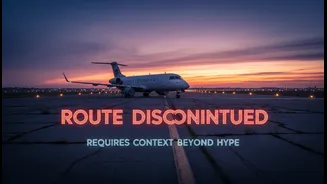
The reality, nearly a decade later, is turbulent. As of mid-2026, a staggering number of routes have been discontinued. Reports indicate that out of 669 routes made operational since 2017, only 336 remain active. This means nearly 50% of the connections that were celebrated at launch are no longer served. The core of the problem lies in what happens after the three-year subsidy period ends. Airlines have found that many routes simply cannot sustain themselves commercially. Low passenger demand, high operational costs, and difficulties in securing convenient landing slots at congested metro airports make these routes a financial burden once the VGF runs out. Case studies like the airports in Bidar and Kalaburagi in Karnataka, which saw services discontinued after the subsidy ended, highlight this challenge.
The Real-World Impact on the Ground
Beyond the statistics, the discontinuation of a flight has profound effects on local communities. For a small business owner, it means the loss of quick access to larger markets. For the tourism sector, it’s a direct blow to attracting visitors who might have otherwise come. Students and those needing specialised medical care in a larger city lose a vital, time-saving link. The closure also creates a ripple effect, impacting ancillary services from airport taxis to local hotels that had sprung up in anticipation of increased traffic. The shutdown of flights at several newly launched airports in Uttar Pradesh within months of their inauguration underscores the devastating impact of low footfall and commercial unviability on local aspirations. When a route is pulled, it is not just a flight that is lost; it is a connection to opportunity and a promise of development that is broken.
A Course Correction with Viksit UDAN
The government has acknowledged these challenges and, in July 2026, launched a revamped scheme called Viksit UDAN. With a massively increased outlay of nearly ₹29,000 crore, the new phase aims to address the scheme's core weaknesses. A key change is the extension of the subsidy period for airlines from three years to five, providing a longer runway to achieve commercial viability. There is also a greater focus on building robust infrastructure, with significant funds allocated for developing 100 new aerodromes and providing operational support. However, experts argue that sustainable demand cannot be created by subsidies alone. It requires a holistic approach that includes developing local economic corridors and tourism circuits to ensure that there are compelling reasons for people to fly to and from these regional centres year-round.