

What is Operation Economic Outcast?
On August 24, 2026, the United States government announced the launch of 'Operation Economic Outcast,' a significant expansion of its economic sanctions program against Iran. US Treasury Secretary Scott Bessent described the initiative as an “unprecedented
campaign” and an “economic onslaught” designed to cut off Iran's connections to the global financial system. The stated goal is to isolate the Iranian government by targeting not only Iranian entities but also the international networks that facilitate its trade and revenue generation. This represents an escalation of the long-standing “maximum pressure” campaign, shifting focus to third countries and commercial entities that continue to do business with Tehran.
The Newly Targeted Networks
The latest measures are sweeping, targeting five specific sectors of Iran’s economy: digital assets, technology, gold, aviation, and shipping. The sanctions name over 60 new entities, individuals, and vessels across several jurisdictions, including China, the United Arab Emirates, Hong Kong, Singapore, and Switzerland. These networks are accused of helping Iran transport oil, procure missile and nuclear technology, conduct cyber operations, and launder money for the Islamic Revolutionary Guard Corps (IRGC). By sanctioning these commercial channels, Washington aims to close loopholes that have allowed Iran to weather previous restrictions.
The Justification for Escalation
US officials have framed the operation as a necessary step to counter what they describe as Iran's destabilizing activities. These include alleged attacks on US forces, illicit weapons procurement, and cyber intrusions into American infrastructure. Secretary Bessent stated the objective is to “sever every economic lifeline that sustains this tyrannical regime until Tehran stands alone.” The move comes amid a stalled conflict that began in February 2026, with the US aiming to generate new leverage. The administration has warned that any country or company continuing to interact with Iran will face a choice between prosperity and isolation, with President Trump reportedly making direct calls to world leaders to demand compliance.
Global Reactions and Potential Fallout
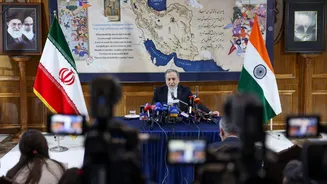
The announcement has been met with defiance from Iran and caution from its trading partners. Iranian officials have stated they anticipated the move and have plans to counter the sanctions, dismissing it as an act of desperation. Meanwhile, China, Iran’s largest trading partner, has warned that sanctions and pressure tactics lead to escalation and has vowed to protect its interests. The operation's success hinges on whether the US is willing to enforce secondary sanctions on major economies like China. Experts suggest that while the measures will create incremental pressure, Iran has a long history of adapting to sanctions by using alternative financial channels. The true impact will depend on the extent to which global banks and trading partners comply with Washington's demands, with some analysts remaining skeptical of a major shift without firm action against key players like Chinese banks.
What This Means for India
For India, the implications are complex. While bilateral trade with Iran has already fallen significantly since 2019, the threat of secondary sanctions creates further uncertainty for Indian exporters. India's immediate risk is not necessarily a direct cut in supply, as it has diversified its oil imports, but the potential for a spike in global crude prices. If China is forced to reduce its imports from Iran, it will seek oil from other sources, increasing global demand and pushing prices higher. The operation puts nations like India in a difficult diplomatic position, caught between its strategic interests and the pressure from the United States to fully isolate Iran. The coming weeks will reveal how forcefully the US applies these new rules and how countries navigate the increasingly fragmented global economic landscape.