



Beyond Water and Oxygen
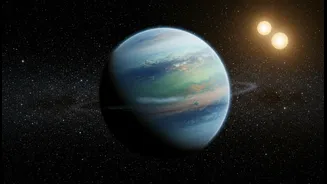
For decades, the search for extraterrestrial life has followed a simple mantra: “follow the water.” Scientists reasoned that since all life as we know it requires liquid water, our best bet was to find planets and moons where it could exist. This led
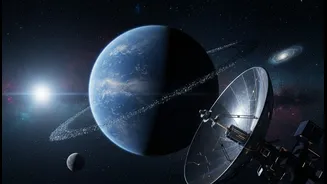
to a focus on the “habitable zone” around stars, where temperatures are just right. The next step has been to look for biosignatures in planetary atmospheres—gases like oxygen, methane, or carbon dioxide that, in the right combination, could hint at biological processes. Missions like the James Webb Space Telescope are doing just that, sniffing the air of distant worlds for clues. While promising, this approach has a fundamental ambiguity: non-biological geological or chemical processes can also produce these gases, leading to potential false positives. This has pushed scientists to search for a more definitive fingerprint of life, something that chemistry alone is highly unlikely to create.
Life’s Telltale ‘Handshake’
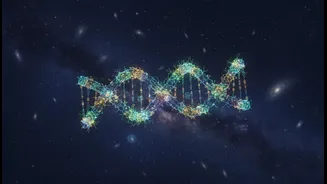
The game-changing signature isn't a single element or compound, but a property of molecules known as chirality. It’s best understood with a simple analogy: your hands. Your left and right hands are mirror images of each other, but they are not identical; you can’t perfectly superimpose one on the other. Many of the organic molecules essential for life—including amino acids (the building blocks of proteins) and sugars (which form the backbone of DNA and RNA)—are also chiral. They can exist in both a left-handed (L) form and a right-handed (D) form. Chemically, both versions are almost identical and can participate in the same reactions. When these molecules are made in a lab or through non-biological processes in nature, they are produced in a roughly equal 50/50 mixture of left- and right-handed forms, a state known as racemic.
Why an Imbalance Screams 'Biology'
Here is where it gets interesting. Life on Earth is incredibly selective. The proteins in all living things, from bacteria to blue whales, are built almost exclusively from left-handed amino acids. Similarly, the sugars in our DNA and RNA are exclusively right-handed. This phenomenon, known as homochirality (meaning “same handedness”), is a universal and distinctive feature of terrestrial biology. Scientists are still debating exactly why life developed this preference, but the fact that it did is profound. A 50/50 mix is the default state of random chemistry. A significant imbalance, where one “hand” is strongly preferred over the other, is considered an unambiguous sign that a selective process is at work. And the most efficient selective process we know of is life itself.
A New Toolkit for Planet Hunters
Armed with this knowledge, astrobiologists are now developing methods and instruments to specifically search for this chiral imbalance. The key is that homochiral molecules interact with light in a unique way. When polarized light is passed through a solution containing an excess of one handedness, it rotates the plane of the light. By measuring this rotation, scientists could determine if a sample contains a biological preference. Future missions to Mars or icy moons like Jupiter's Europa could be equipped with instruments designed to perform this test on soil, ice, or liquid samples. Detecting a strong chiral preference would be one of the most powerful pieces of evidence for the existence of past or present life—even if that life is based on a completely different biochemistry, as long as it also developed a molecular preference.
The Search Just Got Smarter
This focus on molecular signatures doesn't mean the search for habitable worlds and atmospheric gases will stop. Rather, it adds a crucial, more definitive layer to the investigation. The discovery of chiral molecules in meteorites and even in interstellar gas clouds proves that these building blocks exist throughout the cosmos. Now, the challenge is to find a place where they have been organized by biology. Of course, this assumes that extraterrestrial life would also develop homochirality, which many scientists believe is a likely consequence of any self-replicating chemical system. It’s a subtle clue, hidden in the very architecture of molecules, but it represents a giant leap in our ability to distinguish a living world from a merely interesting one.