



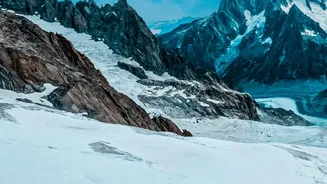
The New Altitude
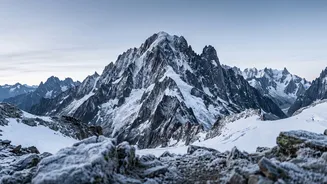
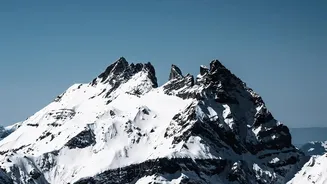
According to the latest survey conducted in September 2026 and announced on October 14, Mont Blanc's summit now stands at 4,807.47 metres. This marks a surprising increase of 1.88 metres from the last measurement in 2023, which recorded one of the lowest
heights in recent memory at 4,805.59 metres. This fluctuation reverses a recent downward trend; the mountain measured 4,807.81 metres in 2021 and has seen a general decline from a high point of 4,810.90 metres in 2007. A team of expert surveyors from France's Haute-Savoie region undertakes this complex task every two to three years, providing a crucial snapshot of the summit's condition. This year's growth spurt brings the peak back to a height more consistent with measurements from the mid-2000s, demonstrating the mountain's dynamic nature.
A Summit Shaped by Wind and Snow
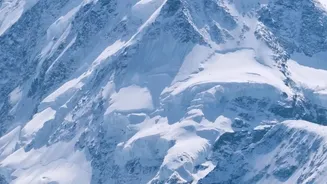
It is important to understand that the mountain's rock summit is stable at around 4,792 metres. The variation in height comes from the thick cap of ice and snow that covers it, which can change in depth by several metres. The primary drivers of this change are not necessarily summer melting, but rather high-altitude wind and precipitation patterns. Strong winds can scour snow from the summit, lowering its height, while heavy winter and spring snowfall can add to it. Jean des Garets, the chief surveyor for the Haute-Savoie region, emphasized that the summit is in 'constant motion'. Therefore, a year-over-year change in height reflects the specific weather of the past seasons, not a simple story of melting alone.
The Science of Measurement
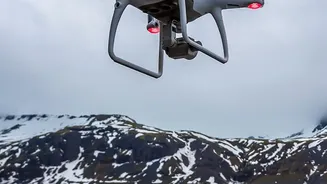
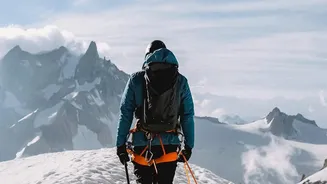
Measuring a mountain is no simple task. Since 2001, teams of surveyors have made the arduous climb to the summit to gather precise data. They use a combination of cutting-edge tools to ensure accuracy to the centimetre. At the peak, they plant receivers that record GPS signals from satellites. These signals are then corrected using a network of ground stations to achieve pinpoint accuracy. For the first time in recent surveys, a drone was also used to create a highly detailed 3D model of the snow and ice cap, allowing scientists to analyse its volume and shape like never before. This long-term project is about more than just a number; it's about building a comprehensive dataset for future generations of climatologists and glaciologists to study.
A Barometer for a Changing Climate
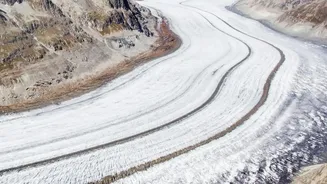
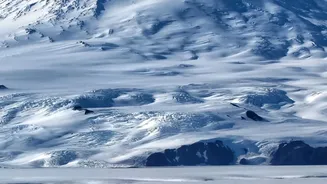
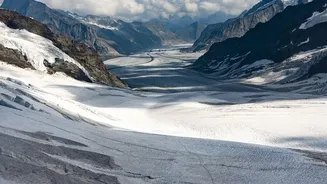
While surveyors caution against linking a single year's height change directly to climate change, the broader trend across the Alps is undeniable. The Alps are warming at roughly twice the global average rate. This has led to a dramatic and visible retreat of glaciers across the mountain range. Since 1850, Alpine glaciers have lost about half their volume, and the rate of loss is accelerating. Swiss glaciologists recently noted an 'explosion of melt rates', with the country's glaciers losing a staggering amount of ice in just the last few years. This widespread melting impacts everything from water supply for downstream communities to the stability of the mountains themselves as permafrost—the frozen 'glue' holding rocks together—begins to thaw, increasing the risk of rockfalls.
Why It Matters Beyond Europe
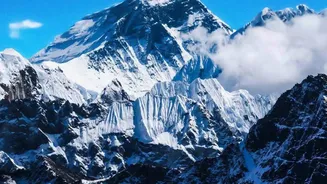
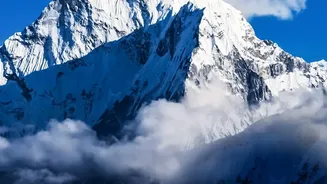
The changes observed on Mont Blanc and across the Alps are a powerful indicator of global climate shifts. For audiences in India, the story is particularly resonant. The Himalayas, often called the 'Third Pole', face similar and even more severe challenges from rising temperatures and glacial melt. The health of Himalayan glaciers is critical for the water security of billions of people across Asia. Understanding the dynamics of ice loss, permafrost thaw, and changing weather patterns in the Alps provides a crucial, albeit smaller-scale, model for what is happening in other major mountain systems. The data from Mont Blanc contributes to a global scientific effort to track and predict the impacts of a warming planet, reinforcing the interconnectedness of our world's ecosystems, from the roof of Europe to the peaks of the Himalayas.