


A Pancake Unlike Any Other
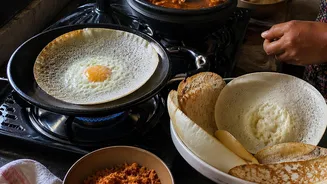
At first glance, an appam might look like a simple pancake. But to call it that would be an understatement. Made from a fermented batter of ground rice and coconut milk, the appam is a study in contrasts. It’s cooked in a special curved pan known as an 'appachatti',
which is swirled to spread the batter thin. This technique creates its signature look: wonderfully crisp, intricate, lace-like edges that give way to a thick, soft, and spongy centre. The fermentation process, traditionally kick-started with a splash of palm toddy, imparts a subtle, slightly tangy flavour that is utterly distinct from other Indian breads like dosa or roti. It’s light, airy, and designed to be the perfect vessel for rich, flavourful curries.
A Bite of Disputed History
The exact origins of the appam are shrouded in a fascinating culinary mystery. Food historians have found mentions of it in ancient Tamil Sangam literature, suggesting it has been a part of the region’s diet for centuries. Some theories trace its heritage to early Jewish settlers in Kerala, while others link it to the state's ancient Syrian Christian community, for whom it remains a cherished dish, especially during Easter celebrations. What isn’t disputed is its deep-rooted cultural significance in the southern states of Kerala and Tamil Nadu, as well as in Sri Lanka, where it is famously known as a 'hopper'. This rich history adds another layer of flavour to an already complex dish, connecting the diner to centuries of tradition.
The Many Faces of Appam
To think there is only one type of appam would be to miss out on its incredible versatility. The classic version is the vella appam (plain appam) or palappam, made with coconut milk. But from there, the variations are plentiful and delicious. A popular choice for a hearty breakfast is the mutta appam, where an egg is cracked into the pillowy centre as it cooks, steaming to perfection. For those with a sweet tooth, there’s neyyappam, a smaller, thicker version fried in ghee and sweetened with jaggery. And then there's idiyappam, or string hoppers, which are technically a different preparation but belong to the same family. These are delicate nests of steamed rice noodles, offering a completely different but equally satisfying texture.
The Perfect Culinary Partner
An appam is rarely eaten alone; its genius lies in its ability to pair with a wide array of accompaniments. The most classic pairing is a mild and fragrant vegetable stew, often called 'ishtoo' in Kerala, a creamy coconut milk-based curry that gently complements the appam's subtle tang. Another quintessential partner is kadala curry, a robust and spicy dish made with black chickpeas. But the options don't stop there. From fiery chicken or mutton curries to a simple bowl of sweetened coconut milk infused with cardamom, the appam’s soft centre soaks up gravies beautifully, making every mouthful a perfect union of flavours and textures. This adaptability makes it a staple for breakfast, lunch, or a light dinner.