





A Boom in Global Connectivity
The year 2026 has marked a significant expansion in India's international flight network, driven by soaring demand from business travellers, tourists, and the large Indian diaspora. Airlines are increasingly betting on direct, point-to-point routes, bypassing
traditional layover hubs in the Gulf and Europe. This shift not only cuts down travel time but also simplifies the journey, eliminating the stress of tight connections and potential baggage transfer issues. Both Indian carriers like IndiGo and Air India, and international airlines like Lufthansa and SWISS, have been actively adding new services or increasing frequencies on existing popular routes. This expansion is a direct response to India's growing stature as the world's third-largest aviation market, with millions more Indians travelling overseas each year.
Key New Routes Taking Flight
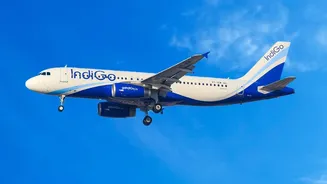
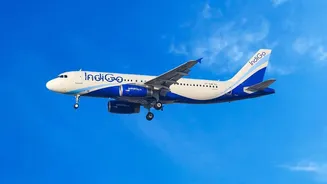
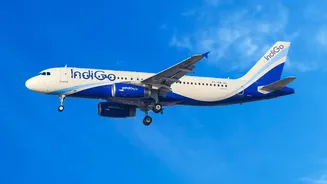
Several exciting new city pairings have launched in 2026, opening up destinations that were previously harder to reach. SWISS International Air Lines, for instance, launched its first-ever service to South India, connecting Bengaluru with Zurich with a five-times-weekly flight starting in October. This provides a crucial direct link to central Europe for South India's burgeoning business and leisure travel markets. In another first, IndiGo began direct flights to Athens from both Delhi and Mumbai, making Greece and its famous islands significantly more accessible. To the east, IndiGo also launched a daily nonstop service from Kolkata to Shanghai, enhancing connectivity with China. Air India complemented this with a new service from Mumbai to Tokyo's convenient Haneda airport.
Indian Carriers Spread Their Wings
Indian airlines have been particularly ambitious in their international expansion. IndiGo has added several new routes, including a thrice-weekly flight from Chennai to Réunion Island, a French territory in the Indian Ocean, and a new service connecting Delhi to Colombo six times a week. The airline has also been a key player in the launch of Noida International Airport (Jewar), with plans for international services to destinations like Zurich and Singapore mooted for late 2026. Air India, following its acquisition by the Tata Group, has also been focused on strengthening its global network. It recently resumed true nonstop flights from Delhi and Mumbai to New York (JFK) and Newark, after airspace restrictions had forced a temporary refuelling stop in Rome. This change alone cuts the journey time by up to five hours on these ultra-long-haul routes.
More Options from International Airlines
Foreign carriers are also boosting their presence. The Lufthansa Group announced it was adding flight frequencies for its summer 2026 schedule to meet growing demand. This includes more weekly flights connecting its hubs in Frankfurt and Munich with key Indian cities like Delhi, Bengaluru, Chennai, and Hyderabad. For travellers between Australia and India, Qantas has been operating key nonstop routes, including a seasonal service from Melbourne to Delhi and a year-round flight from Sydney to Bengaluru. These services, operated on Boeing 787 Dreamliners, are crucial for connecting the large Indian diaspora in Australia directly with major Indian hubs. However, travellers should note that some of these routes can be seasonal or subject to schedule changes.
What This Means for Travellers
The proliferation of direct flights offers tangible benefits. The most obvious is the time saved—often between four to eight hours compared to a one-stop itinerary. This is a game-changer for business travellers on a tight schedule and families travelling with children. Beyond convenience, increased competition on these routes can also lead to more competitive fares over time. Furthermore, the introduction of modern, fuel-efficient aircraft like the Airbus A350, Boeing 787, and Airbus A321XLR on many of these routes means a more comfortable passenger experience. For those planning travel in late 2026 and beyond, it is worth checking these new nonstop options, as they represent a fundamental improvement in how travellers can connect with the world from India.