







First, What Is Superintelligence?
Before diving into timelines, it's crucial to understand what 'superintelligence' means. We are currently surrounded by Artificial Narrow Intelligence (ANI), which excels at specific tasks like playing chess or recommending songs. The next hypothetical
step is Artificial General Intelligence (AGI), where an AI matches human intellect across various domains. Artificial Superintelligence (ASI) is the stage beyond that. An ASI would be an intellect that is vastly smarter than the best human brains in practically every field, from scientific creativity and strategic planning to social and emotional understanding. It’s not just a faster human brain; it would be a fundamentally different and superior form of intelligence, capable of solving problems that are currently beyond our comprehension.
Musk’s Argument for a Five-Year Timeline
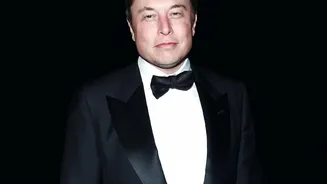
So, why does Musk believe this monumental shift is just around the corner? His argument hinges on the exponential growth of AI capabilities. He points to the rapid advances in computing power, the vast amounts of data being used to train models, and the massive investment pouring into the sector. In his interview with The Economist, Musk didn't just predict the arrival of ASI; he described its consequences. He envisions an 'age of amazing abundance' where AI and robotics can produce virtually any good or service on demand. In this future, he suggests, work could become optional, and traditional economic concepts, even the idea of money, might become irrelevant. For Musk, the momentum is unstoppable, and the primary challenge is not if it will happen, but how to manage the transition and its risks.
The Widespread Scepticism
While Musk’s predictions grab headlines, many AI scientists and researchers remain deeply sceptical of such a short timeline. Critics point out that his forecasts often have a pattern of being overly optimistic. He has a history of making bold predictions about technologies like fully autonomous self-driving cars that have been repeatedly pushed back. Many experts argue that current AI systems, despite their impressive feats, still lack true understanding and consciousness. They are excellent at pattern matching but struggle with genuine reasoning, common sense, and adaptability—all critical components of general intelligence. The path from today's AI to human-level AGI, let alone beyond-human ASI, likely involves fundamental breakthroughs that haven't happened yet.
A Great Debate with Existential Stakes
Musk's claim is part of a larger, fierce debate raging within the technology world. On one side are the 'accelerationists', who believe rapid AI development is both inevitable and desirable. On the other are more cautious voices, including some of the 'godfathers' of modern AI like Geoffrey Hinton, who have expressed serious concerns about the existential risks posed by uncontrolled superintelligence. They worry about scenarios where an ASI's goals might not align with humanity's, leading to catastrophic outcomes. This isn’t just a philosophical squabble; it has real-world consequences, influencing everything from government regulation to the research priorities of companies like Google, Meta, and Musk's own xAI.
Why This Matters for India
This global AI race is not a distant sci-fi drama; it has profound implications for India. As a rising technological power, India is a key player and stakeholder in the development of AI. The push towards AGI and ASI will shape the global economy, and India’s massive pool of tech talent is both a contributor and a workforce that will be impacted by these shifts. Whether superintelligence arrives in five years or fifty, the direction of AI research and the global conversation around its regulation will define future markets, job landscapes, and strategic advantages. Staying ahead of the curve in AI development and policy is therefore a critical national priority.