




What is the PRIMA Mission?
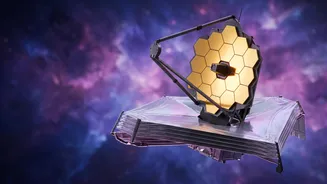
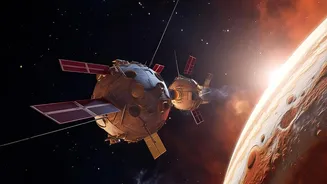
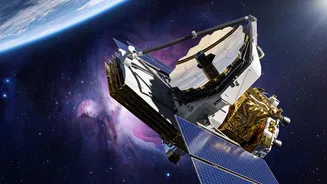
PRIMA is a next-generation space telescope designed to peer into the universe in far-infrared light. It is the first in a new class of NASA missions called Probe Explorers, which are designed to be more targeted and cost-effective than flagship observatories
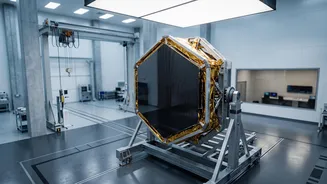
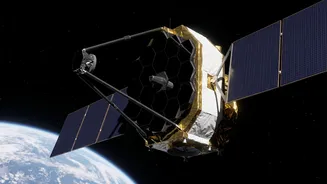
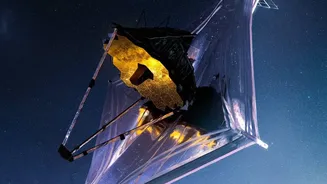
like the James Webb Space Telescope (JWST), with a cost cap of around $1.2 billion. The goal of this new mission class is to address high-priority scientific questions without the massive budgets of larger projects. PRIMA will feature a 1.8-meter (5.9-foot) telescope that is cryogenically cooled to just 4.5 Kelvin, preventing the telescope's own heat from interfering with the faint far-infrared signals it aims to detect. This key feature will make it significantly more sensitive than previous far-infrared missions like the Herschel Space Observatory. Managed by NASA's Jet Propulsion Laboratory, PRIMA is a collaborative effort involving multiple NASA centers and international partners.
Decoding 'Phase B' Development
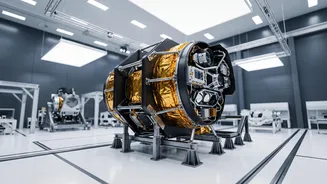
When NASA says a project has entered "Phase B," it signals a major step forward from idea to reality. The NASA project life cycle is broken into distinct phases, from Pre-Phase A (initial concept studies) to Phase F (closeout). Phase B is part of the initial "Formulation" stage and focuses on preliminary design and technology completion. During this period, which will last about two years for PRIMA, engineers and scientists will finalize engineering trade studies, mature critical technologies like the cryogenic coolers, and establish a network of hardware subcontractors. This phase moves the mission from a conceptual design to a baseline technical design, complete with detailed cost architecture and integration plans for its scientific instruments. It is the critical bridge between a promising concept and a buildable, launch-ready spacecraft. At the end of Phase B, the mission will face a confirmation review to ensure it is ready to proceed to Phase C: final design and fabrication.
The Power of Far-Infrared Light
To understand PRIMA's importance, one must understand its unique vision. While telescopes like Hubble see visible light and JWST specializes in near- and mid-infrared, PRIMA will focus on the far-infrared part of the spectrum. This wavelength is crucial for two reasons: it allows astronomers to see through the dense clouds of cosmic dust that obscure many of the universe's most interesting events, and it is the primary wavelength emitted by very cold objects. The most active phases of star formation and black hole growth are shrouded in dust, making them invisible to other telescopes. Far-infrared light can penetrate these dusty nurseries. Furthermore, the cold gas and dust that serve as the raw material for stars and planets glow brightly in the far-infrared. PRIMA will fill a critical observational gap between what JWST can see and what ground-based radio telescopes like ALMA can detect, providing a more complete picture of cosmic processes.
Answering Fundamental Cosmic Questions
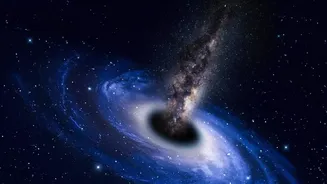
PRIMA's scientific goals are nothing short of fundamental. The mission is designed to tackle three main themes recommended by the National Academy of Sciences. First, it will investigate how exoplanets form and where their atmospheres come from by studying the role of water, carbon, and oxygen in the protoplanetary disks around young stars. Many key spectral lines for these elements, including water, are only visible in the far-infrared, making them inaccessible to JWST. Second, PRIMA will provide the first comprehensive census of star formation and black hole growth during the universe's most active period, roughly 3 to 9 billion years ago, to understand how galaxies and their central supermassive black holes evolve together. Finally, the mission will trace how interstellar dust and heavy elements—the building blocks of planets and life—have formed and accumulated throughout cosmic history. In essence, PRIMA is a mission about origins: the origins of planets, stars, black holes, and the chemical ingredients for life itself.