



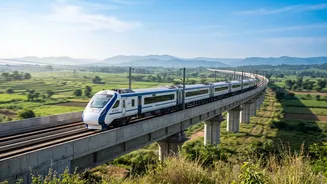

The Journey as it Stands
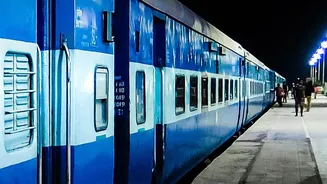
Covering a distance of roughly 770 kilometres, the trip from Delhi to Varanasi is a significant undertaking. For millions of travellers, pilgrims, and business people, Indian Railways is the lifeline. The fastest train currently on this route is the Vande
Bharat Express, which completes the journey in about eight hours. Other popular options like the Rajdhani Express take over 11 hours, often running overnight. While flights are faster, they involve the additional time and hassle of airport transit, making the total door-to-door time comparable for many, and often at a higher cost. This lengthy travel time creates a distinct separation, making a quick weekend trip or a last-minute business meeting a challenging prospect.
Enter the Bullet Train
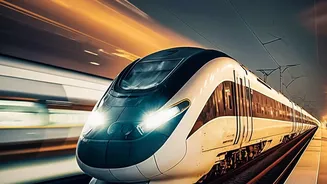
The proposed Delhi-Varanasi High-Speed Rail (DVHSR) corridor is one of the most ambitious infrastructure projects on the national agenda. As India's second bullet train project after the Mumbai-Ahmedabad line, it aims to connect the two cities via a dedicated track designed for speeds up to 350 km/h. The operational speed would likely be around 320 km/h, slashing the travel time to approximately 3 hours and 50 minutes. The project, which was formally announced in the Union Budget 2026-27, is currently in its pre-construction phase, with authorities finalising the detailed project report (DPR) and route alignment.
More Than Just Speed
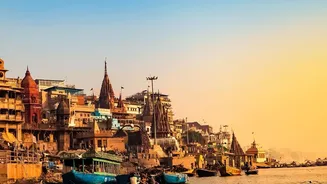
The phrase 'bringing closer' goes far beyond just reducing travel hours. Economically, a sub-four-hour link could be a game-changer. It would enable seamless business travel, potentially turning the entire corridor into a more integrated economic zone. For tourism, the benefits are even more apparent. The project plans to connect major religious and tourist hubs like Mathura, Agra, Prayagraj, and Ayodhya (via a spur line). This could transform pilgrimage and leisure travel, making destinations like the Kashi Vishwanath and Ram temples far more accessible for short trips. Experts note that high-speed rail can boost a region's GDP and create tens of thousands of direct and indirect jobs during and after construction.
Hurdles on the Fast Track
A project of this magnitude is not without significant challenges. The cost is monumental, with estimates running upwards of ₹1.71 lakh crore. Land acquisition across densely populated stretches of Uttar Pradesh is another major hurdle that has delayed other large-scale projects in the past. Furthermore, the technical precision required for a high-speed line is immense. An earlier feasibility report suggesting the route run along a national highway was reportedly questioned by the Railway Board due to the highway's curves, which are unsuitable for trains running at 350 km/h. Ensuring the final alignment is straight enough for safe, high-speed travel is a critical, non-negotiable step.
A Glimpse into the Future
While the physical tracks are yet to be laid, the vision for the Delhi-Varanasi corridor is a powerful symbol of a modernising India. It represents a leap towards an infrastructure backbone that is faster, more efficient, and environmentally cleaner than current alternatives. The project is not just about connecting two points on a map; it is about weaving together the economic, cultural, and social fabric of the nation's heartland. It could redefine mobility for a generation, much like highways did in the past. The success and learnings from the Mumbai-Ahmedabad corridor will be crucial in navigating the path forward for this transformative project.