






The Old Way to Kashi
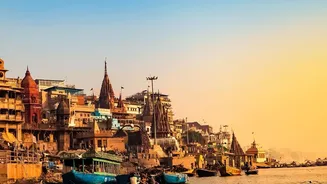
For decades, travelling to Varanasi, one of India's oldest and most sacred cities, was an exercise in patience. For most, the primary mode of transport was the Indian Railways network, with journeys from major hubs like Delhi or Kolkata often stretching
anywhere from 12 to 18 hours. While numerous trains served the route, they were often plagued by delays and the usual rigours of long-distance rail travel. Flights were a quicker but significantly more expensive alternative, and road travel, despite improving highways, remained a time-consuming affair. This often meant that a trip to Varanasi required careful planning around travel fatigue, especially for pilgrims and elderly travellers. The existing chair-car service from Delhi, though a huge improvement, only solved part of the puzzle, leaving a gap for other major routes and for those who prefer overnight journeys.
A Game Changer from Delhi
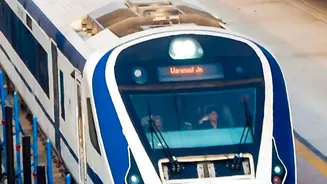
The first Vande Bharat Express to Varanasi, launched from New Delhi, was a resounding success, proving the demand for high-speed, premium train travel. It slashed the travel time between the capital and the holy city to a mere eight hours, a journey that previously took up to 15 hours or more on other express trains. With 100% occupancy and significant earnings in its first year alone, the route demonstrated a clear appetite for a service that prioritized speed and comfort. Building on this success, Indian Railways is now reportedly planning a second service on this crucial route—an overnight Vande Bharat Sleeper. This would cater to a different segment of travellers, those who prefer to travel through the night and arrive fresh in the morning, combining the speed of the Vande Bharat with the convenience of a sleeper train.
What the Vande Bharat Offers
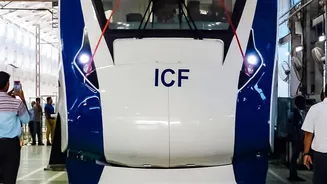
The Vande Bharat isn't just about speed; it's a complete overhaul of the passenger experience. These indigenously manufactured, engine-less trainsets are designed for rapid acceleration and deceleration, which helps cut down journey times significantly. Inside, passengers are treated to a level of comfort previously unseen on most Indian trains. The fully air-conditioned coaches feature ergonomic reclining seats (with rotating options in executive class), onboard Wi-Fi for entertainment, and GPS-based passenger information screens. Cleanliness is a major focus, with modern bio-vacuum toilets and an emphasis on hygiene. Safety is also paramount, with the advanced 'Kavach' anti-collision system, CCTV cameras, and automatic doors ensuring a secure journey. For many, it's a travel experience comparable to a short-haul flight, but with the added benefit of scenic views and more spacious seating.
New Connections, New Possibilities
The expansion doesn't stop at Delhi. New Vande Bharat routes are creating a web of high-speed connectivity with Varanasi at its hub. A recently launched service now connects Varanasi to Khajuraho, a UNESCO World Heritage site in Madhya Pradesh that was previously difficult to access directly by rail. This route, which also connects to the pilgrimage site of Chitrakoot, has been hailed as a major boost for tourism, making it easier for both domestic and international travellers to explore India's rich spiritual and heritage circuits. Similarly, a Vande Bharat connecting Varanasi with Howrah (Kolkata) is also operational, reducing travel time on another of India's busiest corridors from over 12 hours to around 10 hours. These new links are not just about convenience; they are strategic moves to unlock the tourism potential of entire regions.
The Broader Impact on Varanasi
The arrival of more Vande Bharat services is poised to have a transformative effect on Varanasi's economy. Faster and more comfortable travel options make weekend trips and short spiritual getaways more feasible for people from nearby cities. This is expected to lead to a significant increase in tourist footfall, benefiting hotels, local artisans, tour guides, and the entire hospitality ecosystem. By making the city more accessible, these trains are helping to distribute tourist flow more evenly throughout the year, rather than just during peak festival seasons. For a city that is a cornerstone of India's spiritual tourism, this improved connectivity reinforces its status as a premier destination while making the journey itself a part of the modern pilgrimage experience.