




Tokyo's Tremendous Risk
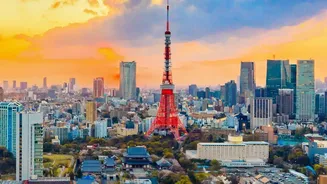
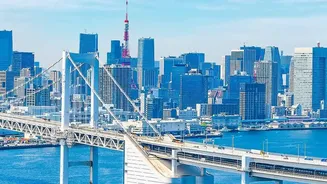
The Tokyo metropolitan area is the world’s largest, a sprawling hub of finance, politics, and culture. It is also one of the most vulnerable. Sitting near the volatile intersection of four tectonic plates, the city lives under the constant threat of a major
earthquake. The Japanese government estimates there is a 70% chance of a magnitude-7 class quake hitting the region within the next 30 years. Such an event, particularly a feared Nankai Trough megaquake, could trigger devastating tsunamis and fires, potentially causing thousands of deaths and paralyzing Japan's central government and economy. This single point of failure, where the incapacitation of one city could cripple an entire nation, is the driving force behind Japan’s search for a Plan B.
A Blueprint for a Backup Capital
In response to this existential threat, Japan's parliament enacted legislation in July 2026 to create a framework for a backup capital. This is not about relocating the capital permanently. Instead, the goal is to designate one or more regions that can temporarily take over essential state functions if Tokyo is knocked offline. The law empowers the Prime Minister to select a location based on applications from local prefectures. Key criteria include having a lower risk of being hit by the same disaster as Tokyo, possessing sufficient infrastructure, and having the economic and population scale to support the nation’s core administrative and legislative bodies in a crisis. The aim is to ensure continuity of government, allowing for an organized response and recovery rather than a total collapse of command and control.
The Leading Contenders and Political Complexities
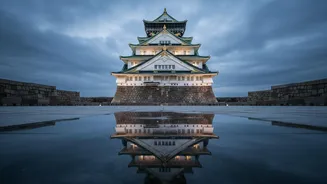
The conversation around a backup capital has been active for decades, but recent political will has pushed it to the forefront. Osaka, Japan's second-largest metropolitan area, is widely seen as the leading candidate. The Japan Innovation Party (JIP), a key political player with its base in Osaka, has long championed this cause and made the backup capital bill a condition for its support of the ruling coalition. This has led to criticism that the plan is designed to favor Osaka. However, other regions are also vying for the role, including Aichi (home to Nagoya) and Fukuoka, each arguing their own strategic advantages. A major concern is ensuring the backup location is truly safe; some have pointed out that a Nankai Trough earthquake could potentially impact both Tokyo and Osaka simultaneously, defeating the purpose of the plan.
More Than Just a Spare City
The backup capital plan is part of a much broader, multi-trillion yen strategy by Japan to bolster its national resilience. In June 2026, the government updated its 10-year disaster plan for Tokyo, with ambitious goals to halve projected fatalities and building losses from a major quake. This involves a massive increase in specific policy goals, from promoting fire-preventing seismic circuit breakers in homes to ensuring all major companies have a Business Continuity Plan (BCP). The government is also pushing for citizens to be more prepared, aiming for 100% of households to stockpile at least three days' worth of food. These efforts, combined with the new centralized Disaster Management Agency set to launch in late 2026, show a shift from a reactive to a proactive, long-term approach to survival.
A Lesson for the World's Megacities
While Japan's seismic situation is unique, its dilemma is not. Around the world, nations are increasingly concentrating their political and economic power in a single, massive urban area. These megacities are often located in coastal or other high-risk zones, making them vulnerable to everything from climate change-fueled superstorms to pandemics and infrastructure failure. Japan's move to create a backup capital, though fraught with political and logistical challenges, serves as a powerful case study. It highlights a critical question for governments everywhere: how do you protect your nerve center in an age of growing and unpredictable threats? The plan forces a national conversation about decentralization, redundancy, and what it truly means to be prepared for a worst-case scenario.