








What Exactly is an eVTOL?
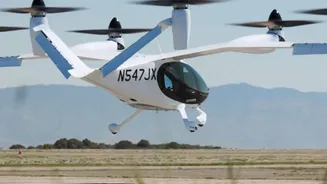
First, let's decode the jargon. eVTOL stands for electric Vertical Take-Off and Landing. Think of it as a smarter, quieter, and cleaner cousin of the helicopter. These aircraft use electric power from batteries to lift off and land vertically, meaning
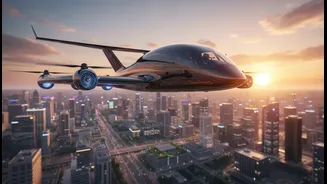
they don't need a runway. Once airborne, they can transition to fly forward like a conventional plane. The all-electric design is the source of the 'zero in-flight tailpipe emissions' claim. Unlike helicopters that rely on noisy, fuel-burning engines, eVTOLs use multiple electric motors, making them significantly quieter and eliminating direct pollution during operation, a huge plus for congested urban environments. This technology is at the heart of a new concept called Urban Air Mobility (UAM), which aims to add a new, aerial layer to city transportation.
Meet India's Flying Taxi: The e200
The company at the forefront of this revolution in India is The ePlane Company, a startup incubated at IIT Madras. Founded by aerospace professor Satya Chakravarthy, the company is developing India’s answer to the flying taxi: the e200. This compact aircraft is designed to carry two passengers and can achieve a cruising speed of around 150-200 km/h. With a projected range of up to 200 kilometres, it is purpose-built for short, rapid hops across a city, effectively connecting airports, business hubs, and residential areas. Recently, the company achieved a major milestone by unveiling its first full-scale prototype, the e200X, moving the project from computer simulations to physical testing. This Made-in-India aircraft was designed and assembled at the company’s facility in Chennai, a significant achievement for the country's aerospace and deep-tech sectors.
The Promise: Slashing Commute Times
The most compelling promise of the e200 is its potential to radically reduce travel time. In cities like Mumbai, Delhi, or Bengaluru, where a 20-kilometre journey can easily take over an hour by road, the e200 could cover the same distance in a fraction of the time. The company suggests its vehicles could be up to 10 times faster than road transport. This isn't just about convenience for a select few. The technology has broader applications that could benefit society, including transporting organs, delivering emergency medical supplies, or operating as air ambulances where speed is critical. Beyond passenger travel, the underlying technology can be adapted for cargo, providing a swift and efficient solution for urban logistics.
From Dream to Reality: The Hurdles Ahead
While the vision is exciting, the path to a sky full of air taxis is not without challenges. The biggest hurdles are not technological, but regulatory and infrastructural. India’s aviation authority, the Directorate General of Civil Aviation (DGCA), is still in the process of formulating a complete set of rules for certifying and operating eVTOLs. Then there is the infrastructure problem. These aircraft will need a network of 'vertiports'—essentially landing pads with charging facilities—on rooftops or at key locations. Building this network in dense Indian cities will require significant investment and planning. Finally, there's the question of public acceptance and cost. Gaining people's trust to fly in a new type of aircraft will be crucial, as will ensuring the service is affordable enough to become a viable alternative to ground transport, not just a luxury for the wealthy.
A New Era for Indian Cities?
Despite the challenges, the development of the Chennai-built e200 is a landmark moment. It represents a homegrown solution to a universal urban problem. The project has garnered significant attention, securing funding and technical support from major players like NVIDIA, which is helping with the complex simulations needed for certification. The ePlane Company has already received design approval from the DGCA for its organisation, a first for a private Indian company in this space, and its application for type certification has been accepted. This puts it on a formal path toward commercial operation. The e200 is more than just a futuristic vehicle; it’s a symbol of India's growing capability in deep-tech and advanced manufacturing.