







What is Agrivoltaics?
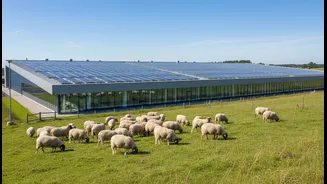
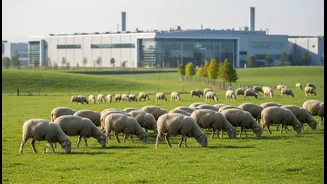
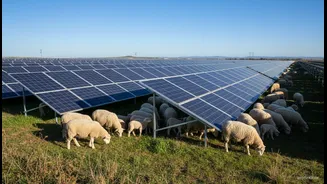
The project at the Volkswagen factory in Poznań, Poland, is a prime example of a concept called agrivoltaics. The term, a blend of "agriculture" and "photovoltaics," refers to the dual use of land for both generating solar power and conducting agricultural
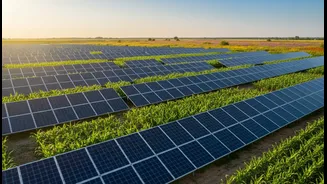
activities. Instead of seeing energy production and farming as competitors for land, agrivoltaics treats them as partners. This can involve growing crops in the shade between panels or, as in this case, using livestock for grazing. The idea has been around since the 1980s but is gaining significant traction as companies and communities seek more efficient and sustainable ways to use land while expanding renewable energy capacity.
Meet the Four-Legged Mowers
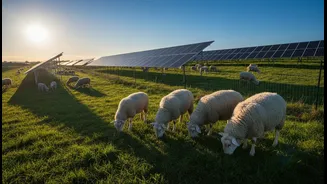
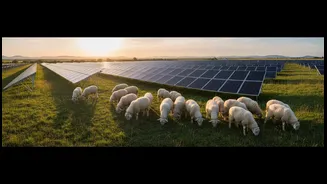
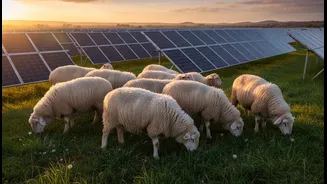
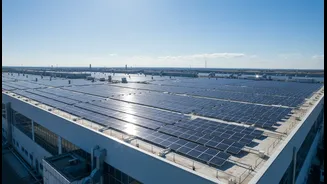
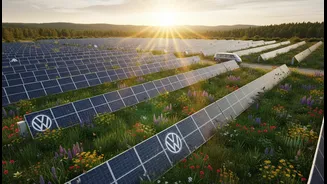
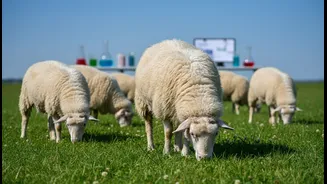
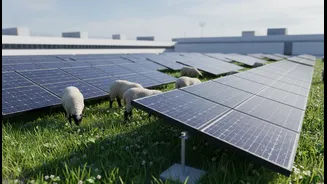
Volkswagen has swapped gas-powered mowers for a flock of 100 sheep to manage the vegetation across its massive solar farm. The installation, which features over 31,000 solar panels, can generate enough electricity on sunny days to power the entire factory, which produces commercial vehicles like the e-Crafter van. Over a year, it supplies about a quarter of the plant's total electricity needs. Keeping the grass from growing tall and shading the panels is crucial for efficiency. The sheep provide a quiet, emission-free alternative to mechanical mowers, trimming the grass naturally throughout the grazing season. According to their owner, the animals have adapted quickly and calmly to their industrial surroundings.
More Than Just Cutting Grass
This initiative is far more than a simple cost-cutting measure. It's a comprehensive scientific experiment. Volkswagen has partnered with researchers from the Poznań University of Life Sciences to study the project's wide-ranging impacts. The study is monitoring everything from soil quality and biodiversity to the welfare of the sheep themselves. One key area of investigation is whether the shade from the solar panels reduces heat stress for the animals, which could in turn keep the forage underneath lusher for longer. The benefits of this symbiotic relationship are numerous: the sheep get food and shelter, while their grazing aerates the soil and their manure acts as a natural fertilizer, all of which enhances the local ecosystem.
A Model for a Greener Industry
While using sheep on solar farms is becoming more common, Volkswagen's project is considered one of Europe's most advanced industrial agrivoltaics experiments due to its strong scientific research component. The project aligns with the company's broader "goTOzero" environmental mission, which aims to make its global operations net carbon-neutral by 2050. Marzena Pillich-Grońska, a director at the Poznań plant, noted that the solar farm now delivers more than just green electricity, as it has become a site that actively supports biodiversity, local agriculture, and research. This living experiment demonstrates that heavy industry and nature don't have to be in conflict; instead, they can work together in a mutually beneficial relationship.