




The Enduring Legend of Queen Veeravati
The most widely told story of Karwa Chauth is that of Queen Veeravati, the only sister to seven loving brothers. Observing her first Karwa Chauth fast after marriage, she grew weak with hunger and thirst. Unable to see their sister suffer, her brothers tricked
her by creating a false moonrise using a mirror in a pipal tree. Deceived, Veeravati broke her fast, and immediately, word came that her husband, the king, had died. Heartbroken, she was later advised by Goddess Parvati to re-observe the fast with strict devotion. She did so, and through her faith and penance, her husband was revived. This story forms the emotional core of the festival, highlighting themes of love, sacrifice, and the perils of a broken ritual.
A Tapestry of Heroic Tales
Veeravati's is not the only legend associated with this day. The festival's narrative is enriched by a collection of stories celebrating female devotion and strength. Another popular tale is of a woman named Karva, who saved her husband from a crocodile by the power of her devotion, even intimidating Yama, the god of death. The Mahabharata also offers a powerful precedent: when the Pandavas were facing hardship, Draupadi sought Lord Krishna's help. He advised her to observe the fast of Karwa Chauth, recounting how Goddess Parvati had done the same for Lord Shiva. Draupadi's adherence to the ritual is believed to have helped the Pandavas overcome their troubles. A similar thread is found in the story of Savitri, who debated with Lord Yama himself to win back the life of her husband, Satyavan. These stories, woven together, create a powerful narrative framework that elevates the fast from a simple ritual to a deeply symbolic act.
In Search of Historical Origins
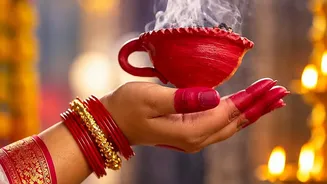
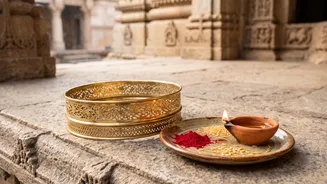
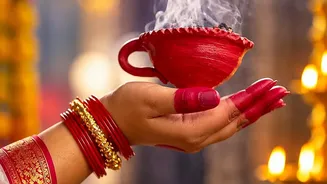
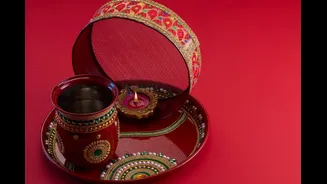
While these legends provide a rich spiritual context, the precise historical origins of Karwa Chauth are less clear. Scholars suggest the festival likely began as a regional tradition in northwestern India, with roots that may be more social and agricultural than mythological. One theory posits that the festival began as women prayed for the safe return of their husbands from military campaigns. Another connects it to the Rabi crop cycle, as the festival coincides with the wheat-sowing season. The 'karva' itself is an earthen pot, which women would fill with wheat grains and offer as a prayer for a good harvest. It also served as a time for married women, who often moved to their husband's village, to bond and form friendships, calling each other 'god-sisters'.
From Ritual to Romance in Modern India
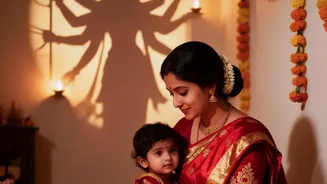
In contemporary India, Karwa Chauth has evolved significantly, largely influenced by popular culture, especially Bollywood films. It is now widely viewed as a romantic festival that celebrates the love and partnership between a husband and wife. This modern interpretation has led to more inclusive practices, with many husbands now fasting alongside their wives or participating more actively in the day's rituals as a gesture of mutual support and equality. The day is marked by festive gatherings, dressing in fine clothes, and exchanging gifts, transforming it into a grand celebration of marital bonds. Technology has also played a role, allowing couples separated by distance to share the experience through video calls.