







For athletes and fitness enthusiasts, sharp footwork and solid coordination are non-negotiable. Both running and jumping rope are classic cardio staples, but when it comes to mastering footwork control, which one truly gives you the edge?
The Case for Jump Rope: Precision and Rhythm
There's a reason
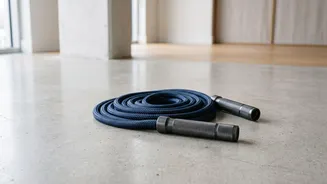
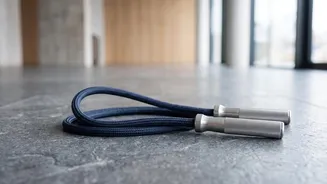
boxers, martial artists, and tennis players live by the jump rope. It is a masterclass in precision, rhythm, and coordination. The exercise forces you to perform rapid, repetitive, and controlled movements within a very small space. Each rotation of the rope demands perfect timing between your hands, wrists, and feet, creating a powerful neuromuscular connection. This develops what experts call proprioception—your body's innate sense of its position in space. By repeatedly landing on the balls of your feet and making tiny, quick adjustments, you are training your nervous system to be more efficient. This plyometric activity strengthens the muscles and tendons in your calves and ankles, improving their elasticity and responsiveness. This translates to quicker reaction times, better balance, and the kind of light, agile footwork essential for sports that require sudden changes in direction.
The Argument for Running: Adaptation and Real-World Control
Running, on the other hand, builds a different but equally crucial type of footwork control: adaptive strength. While jumping rope hones precision in a controlled environment, running teaches your feet and ankles to react to an ever-changing world. Whether you are on a trail, pavement, or an uneven field, your feet must constantly adapt to different surfaces, inclines, and cambers. This process strengthens the smaller stabilizing muscles in your feet and lower legs, which is vital for preventing injuries like ankle rolls. Running builds robust stability and balance through a continuous, dynamic, single-leg balancing act. Each stride is a controlled fall and recovery, training your body to absorb impact and propel itself forward efficiently. This kind of coordination is less about rhythmic bouncing and more about resilient, forward-moving stability that can handle unpredictability over long distances.
Head-to-Head: Rhythmic Precision vs. Adaptive Strength
When placed side-by-side, the unique strengths of each exercise become clear. Jump rope is superior for developing quick, reactive, and rhythmic footwork. It trains your body to be light on your feet, making it an ideal tool for athletes who need to pivot, shuffle, and explode in short bursts. The focus is on vertical movement and minimising ground contact time, which builds explosive power in the lower legs. Running excels at building endurance-based footwork and stability. It strengthens the entire kinetic chain for forward propulsion and teaches your body to maintain control and efficiency over extended periods and varied terrains. While a runner’s footwork is strong and resilient, a rope jumper’s is often quicker and more rhythmically coordinated. Interestingly, the two can complement each other; the ankle stiffness and elasticity built by jumping rope can improve running economy.
The Verdict: What's Best for Your Goals?
Ultimately, the 'better' exercise depends entirely on your specific goals. You can't prepare for a marathon by only jumping rope, and you can't develop a boxer's rapidfire footwork by only jogging. If your primary objective is to improve agility, develop lightningfast feet for sports like basketball or football, and enhance your handeyefoot coordination, jump rope has a clear advantage. Its demands on timing and rhythm provide focused training for controlled quick movements. If your goal is to build endurance, improve your stability on unpredictable surfaces, and develop the strength to maintain form over distance, then running is your goto. It builds the foundational strength and adaptive control needed for most longdistance and fieldbased activities. For the wellrounded athlete, the ideal solution is not to choose one over the other but to incorporate both into your training regimen.