


The Magic of a Well-Used Pan
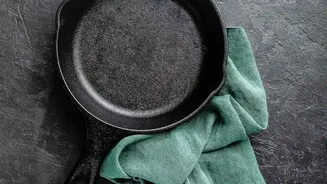
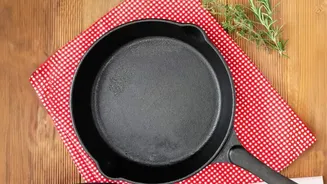
Unlike most cookware that degrades over time, a cast-iron skillet actually improves with every meal you cook. Each time you sear a steak, fry an egg, or bake cornbread, you are contributing to its legendary non-stick surface. The best way to maintain
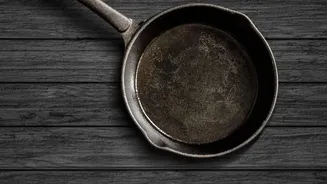
your cast iron is simply to use it regularly. Every time you cook with fats or oils, you're adding another micro-layer to the pan's surface. Over time, these layers build upon each other, creating a durable, slick finish that makes cooking and cleaning easier. Think of it not as a chore, but as an ongoing project where every use is a step toward a better pan. This is why a grandmother’s skillet is so prized; it holds decades of meals within its surface.
Understanding 'Seasoning': A Simple Science
The term 'seasoning' is a bit misleading. It has nothing to do with flavour and everything to do with chemistry. Seasoning is the process of oil being chemically bonded to the iron through a process called polymerization. When you heat a thin layer of oil past its smoke point, the fat molecules break down and rearrange, linking together to form a hard, plastic-like coating. This new polymer layer fills in the microscopic pores of the iron, creating a smooth, naturally non-stick surface. This is also what creates the protective barrier that shields the pan from its arch-nemesis: rust. Without this hardened layer, the iron is exposed to moisture and oxygen, leading to corrosion.
The Golden Rule: Clean and Dry Immediately
The most critical moment in a cast-iron pan’s life is the ten minutes after you’re done cooking. Letting it soak in the sink is a recipe for disaster, as prolonged contact with water will strip the seasoning and invite rust. The best practice is to clean the pan while it's still warm. Use a brush or scraper to remove any food bits under hot water. A little bit of mild soap is fine if needed; it won't ruin a well-established seasoning layer. The crucial step is drying. Never let it air-dry. First, wipe it thoroughly with a towel. Then, place it on the stove over low heat for a few minutes to evaporate any remaining moisture from the iron's pores. This step is non-negotiable for preventing rust.
A Final, Light Touch of Oil
Once your pan is clean and bone-dry, there’s one last step. While the pan is still warm from the burner, apply a very thin layer of cooking oil. Use a paper towel to rub a small amount—about half a teaspoon—over the entire interior surface. Continue wiping until the pan no longer looks greasy, leaving just a dark, matte finish. Applying too much oil can result in a sticky, tacky surface. This final, thin coat of oil acts as a maintenance layer, protecting the iron from humidity in the air while it's stored and helping to bolster the seasoning for your next cook. Store it in a dry place without the lid on to allow for air circulation.
Troubleshooting Common Problems
Even with diligent care, you might encounter issues like rust or flaking. Don't panic; cast iron is incredibly resilient and almost always salvageable. If you see rust, it just means moisture got to the iron. For minor spots, a good scrub with coarse salt or steel wool is often enough to remove it. After scrubbing the rust away, wash, dry, and re-season the pan. If seasoning is flaking, it may be due to layers not fully bonding or from cooking highly acidic foods. Simply scrub away any loose flakes, wash and dry the pan thoroughly, and apply a fresh layer of seasoning in the oven to rebuild a strong base.