





The Power of Plyometrics: Skipping for Speed
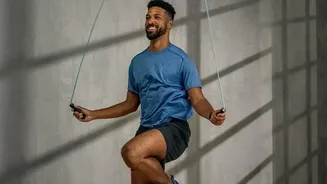
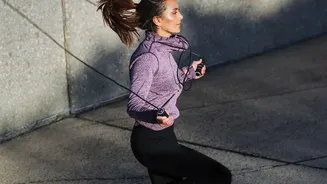
Skipping, or jump rope, has long been a non-negotiable tool for boxers and fighters, prized for its ability to cultivate lightning-fast footwork. But its benefits extend far beyond the boxing ring. Skipping is a form of plyometric training, which involves
explosive movements that train your muscles to produce maximum force in the shortest possible time. Every time your feet hit the ground, your muscles and tendons absorb and release energy, an action known as the stretch-shortening cycle. This process trains your lower leg muscles to be more reactive and stiff, improving the efficiency of your movements. The repetitive, rhythmic nature of skipping enhances coordination and timing, forcing your entire body to work in sync. This isn't just mindless bouncing; it's a high-level neuromuscular workout that teaches your body to be light, quick, and precise on the balls of your feet.
The Foundation of Control: Yoga for Stability
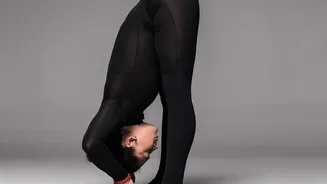
If skipping builds explosive power, yoga builds the stable foundation needed to control it. Agility without stability is just chaotic movement. Yoga excels at enhancing balance and stability, which are crucial for any athletic endeavor. Poses that challenge your balance, like Tree Pose or Warrior III, do more than just test your ability to stand on one leg. They activate and strengthen the small, often-neglected stabilizer muscles around your joints, particularly in the ankles, knees, and hips. This creates greater joint stability, which is essential for preventing injury during high-impact activities. Furthermore, yoga deeply enhances proprioception—your body's awareness of its position in space. By practicing mindful movement and holding balancing postures, you sharpen the communication between your brain and your muscles, allowing for quicker and more accurate postural adjustments.
Synergy in Motion: How They Work Together
The true magic happens when you combine the explosive, dynamic nature of skipping with the grounded, stabilizing practice of yoga. Think of it this way: skipping develops the fast-twitch muscle fibers needed for rapid changes in direction, while yoga strengthens the core and stabilizer muscles that prevent you from losing control during those movements. Agility requires both acceleration and deceleration. Skipping trains the 'go,' while yoga perfects the 'stop' and the transition. Yoga's focus on mobility ensures that your joints can move through their full range of motion with control, while skipping's plyometric impact improves the stiffness and reactive strength of your tendons. Studies have shown that combining different training modes, like plyometrics and stability work, leads to greater improvements in performance than doing either alone. This combination creates a more resilient and adaptable athlete who is not only faster and more powerful but also has superior body control and a reduced risk of injury.
Building Your Agility-Focused Routine
Integrating these two disciplines into your routine doesn't have to be complicated. You can alternate days, dedicating some sessions to high-intensity skipping and others to a focused yoga practice. For example, you might follow a 20-minute jump rope session with 15-20 minutes of restorative yoga to cool down, stretch the muscles, and calm the nervous system. Alternatively, use a short yoga sequence focused on balance and core activation as a warm-up before you start skipping. This pre-activates the stabilizing muscles, preparing your body for the dynamic work ahead. Key yoga poses to focus on include those that challenge single-leg balance, strengthen the core, and open up the hips. For skipping, start with basic two-foot jumps and gradually introduce variations like alternating feet, high knees, and side-to-side movements to further challenge your coordination and footwork.