

The Sobering Numbers
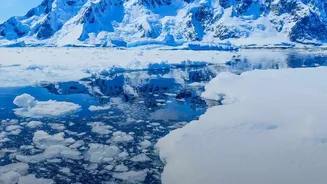
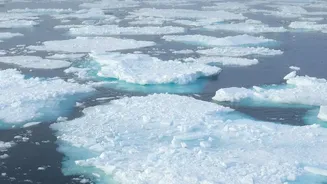
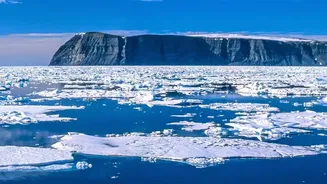
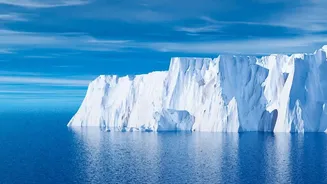
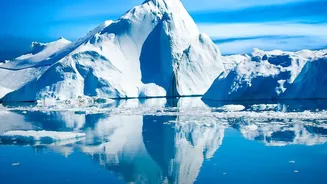
According to the latest satellite data from the National Snow and Ice Data Center (NSIDC), Antarctic sea ice reached its maximum extent for 2026 on September 14, covering 17.59 million square kilometers. While that sounds vast, it is approximately one
million square kilometers below the long-term average for the winter peak—an area roughly twice the size of Spain. This confirmation means that the four lowest winter maximums in the 48-year satellite record have all occurred in the last four years, a statistic that has scientists concerned. After reaching the peak, the ice extent has begun its seasonal decline at a faster-than-usual rate, hinting at the possibility of another record-low summer minimum.
A Break From The Past
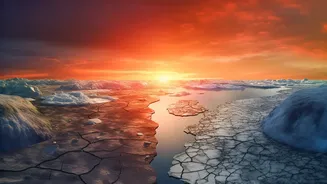
For decades, Antarctica’s sea ice story was one of puzzling stability, and even slight expansion, in stark contrast to the dramatic and consistent melting in the Arctic. This made the southern pole a complex outlier in climate change narratives. However, since 2016, the trend has abruptly reversed. The continent has experienced a sharp decline, culminating in a record-low summer minimum in 2023 and now a series of historically low winter maximums. Scientists are now considering whether Antarctica has entered a new, low-ice era. The pattern is no longer a one-off event, suggesting a fundamental shift may be underway in the continent's climate system.
What's Driving the Decline?
There is no single cause, but a combination of factors is believed to be responsible. Warmer ocean waters are playing a significant role; heat from deeper ocean layers is increasingly mixing with the surface water, making it more difficult for ice to form and stick around. Changes in atmospheric circulation, including stronger westerly winds and regional patterns like the Amundsen Sea Low, are also contributing. These winds can push ice away from the continent but also drive warmer water towards the surface, where it accelerates melting. The persistence of these conditions over several years seems to be reinforcing the low-ice state.
Why Sea Ice Matters Globally
The loss of Antarctic sea ice has far-reaching consequences. Sea ice acts as a massive, reflective shield, bouncing a significant amount of the sun's energy back into space. When it vanishes, the darker ocean water below is exposed, which absorbs more solar heat. This creates a feedback loop, warming the ocean and leading to even more ice melt. While melting sea ice doesn't directly raise sea levels because it's already floating, its absence is still a major concern. The floating ice pack acts as a protective barrier for the continent's massive land-based ice shelves. Without this buffer, the ice shelves are more exposed to damaging ocean waves and warmer waters, increasing the risk of their collapse and accelerating the flow of glaciers into the ocean, which does contribute directly to global sea-level rise.
An Ecosystem on the Brink
The rapid changes are also wreaking havoc on Antarctica’s unique ecosystem. The entire marine food web is built upon the seasonal cycle of sea ice. It provides a crucial habitat for algae and krill, the tiny crustaceans that are the primary food source for penguins, seals, and whales. Emperor penguins, for instance, rely on stable sea ice to breed and raise their chicks; when the ice breaks up too early, entire colonies can fail. A sustained low-ice state threatens to fundamentally reorganise this fragile ecosystem, with unpredictable consequences for its iconic wildlife.