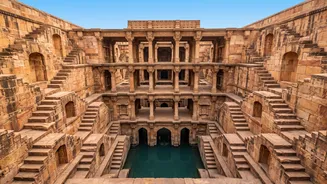









Descents into History
Known as baolis, vavs, or bawdis, these subterranean structures are far more than just wells. They are intricate, multi-storeyed architectural wonders designed to provide reliable access to groundwater year-round, especially in the arid regions of western
and northern India. While a simple well requires you to lower a bucket, a baoli invites you to walk down towards the water itself, via a series of steps that adjust to the fluctuating water table. First appearing thousands of years ago, with early forms traced back to the Indus Valley Civilization, stepwells evolved from purely functional pits into complex structures that became integral to Indian life for centuries. Today, they stand as silent monuments, often overlooked, holding stories of ingenuity and community life deep within their stone walls.
Genius of Ancient Engineering
The construction of a baoli was a remarkable feat. Builders would excavate deep into the earth to reach the groundwater table, lining the massive trench with intricately interlocked stone blocks, often without mortar. This created sturdy, earthquake-resistant structures. Their design brilliantly addressed the challenges of a monsoonal climate. During heavy rains, they acted as massive reservoirs, collecting and storing water that would otherwise be lost to runoff. In the scorching heat of dry seasons, their depth kept the water cool and dramatically reduced evaporation. Descending into a baoli feels like entering another world; the temperature drops with each step, providing a cool sanctuary from the heat above—a feature that was no doubt a primary attraction for centuries.
The Heartbeat of the Community
Baolis were never just for fetching water; they were the vibrant social centres of their time. They were secular spaces where people from all walks of life could gather. Women, who were often the primary water collectors, would meet and socialise on the steps, turning a daily chore into a communal activity. Travellers and merchant caravans found respite in their shaded pavilions and adjoining rooms. Many stepwells were built near temples and mosques, serving as places for ritual cleansing before prayer. Over time, they became integrated into the cultural and spiritual fabric of society, hosting religious ceremonies and celebrations, their walls often adorned with elaborate carvings of deities and mythological scenes.
Icons in Stone
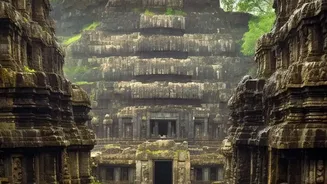
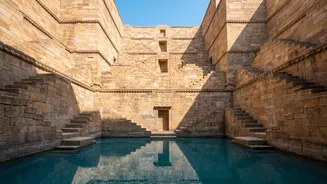
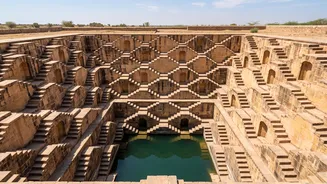
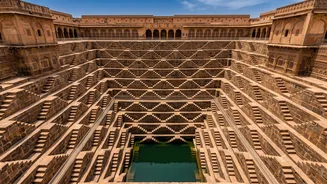
Across India, several baolis stand out for their sheer scale and beauty. In Rajasthan, Chand Baori is a breathtaking example, plunging 13 stories deep with 3,500 perfectly symmetrical steps, creating a mesmerising, almost dizzying, geometric pattern. In Gujarat, Rani ki Vav (the Queen's Stepwell), a UNESCO World Heritage site, is designed like an inverted temple. Its seven levels are lined with over 800 intricate sculptures, turning it into a subterranean art gallery. Meanwhile, in the heart of Delhi, Agrasen ki Baoli offers a dramatic, 60-metre-long corridor of stone arches, providing a tranquil escape from the city's bustle and a popular spot for locals and tourists alike.
From Neglect to Revival
With the advent of modern piped water systems during British rule, many baolis fell into disuse. They were seen as unhygienic and were gradually neglected, becoming dumping grounds for waste and falling into ruin. Delhi alone once had over 100 stepwells, but only around 30 remain today. However, in recent years, a growing appreciation for their historical and ecological value has spurred conservation efforts. Organisations like the Aga Khan Trust for Culture and the Archaeological Survey of India have undertaken ambitious projects to de-silt and restore these ancient structures, cleaning them of debris and revitalising them as functional water bodies.