





The Global Driver: A Warmer Planet
The story of Nepal's floods begins with a global phenomenon: human-induced climate change. The burning of fossil fuels has released greenhouse gases into the atmosphere, trapping heat and causing the planet's average temperature to rise. This warming
isn't uniform, and high-altitude regions like the Himalayas are experiencing temperature increases well above the global average. This accelerated warming acts as the primary driver for a cascade of environmental changes, turning breathtaking landscapes of ice and snow into zones of increasing instability and hazard. According to scientific analysis, the fingerprints of climate change are clear to see in the long-term changes that precondition these disasters.
The Himalayas on Fast Forward
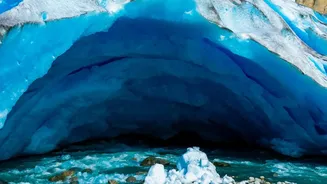
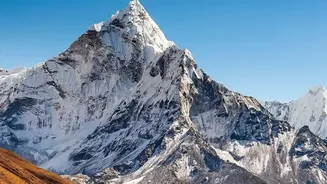
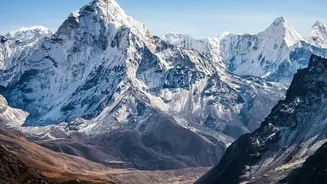
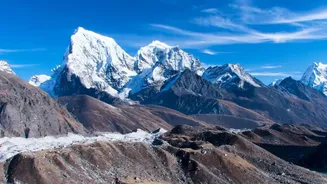
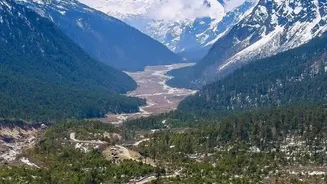
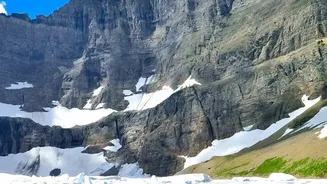
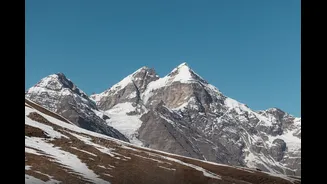
Often called the “Third Pole,” the Hindu Kush Himalaya region contains the largest volume of ice outside the polar regions. These glaciers are crucial, feeding ten major river systems that provide water for billions of people downstream. However, studies from the International Centre for Integrated Mountain Development (ICIMOD) confirm that these vital ice reserves are in peril. Ice loss rates in the Himalayas have roughly doubled since the year 2000. This rapid melting is not just about shrinking glaciers; it's fundamentally altering the stability of the mountains themselves. As temperatures rise, the freezing line—the altitude where the ground stays frozen year-round—is moving higher up the mountains at a rate of about 100 metres per decade. This thaws permafrost, the frozen 'cement' that holds rock and soil together on steep slopes, making them weaker and more prone to collapse.
From Ice to Imminent Danger
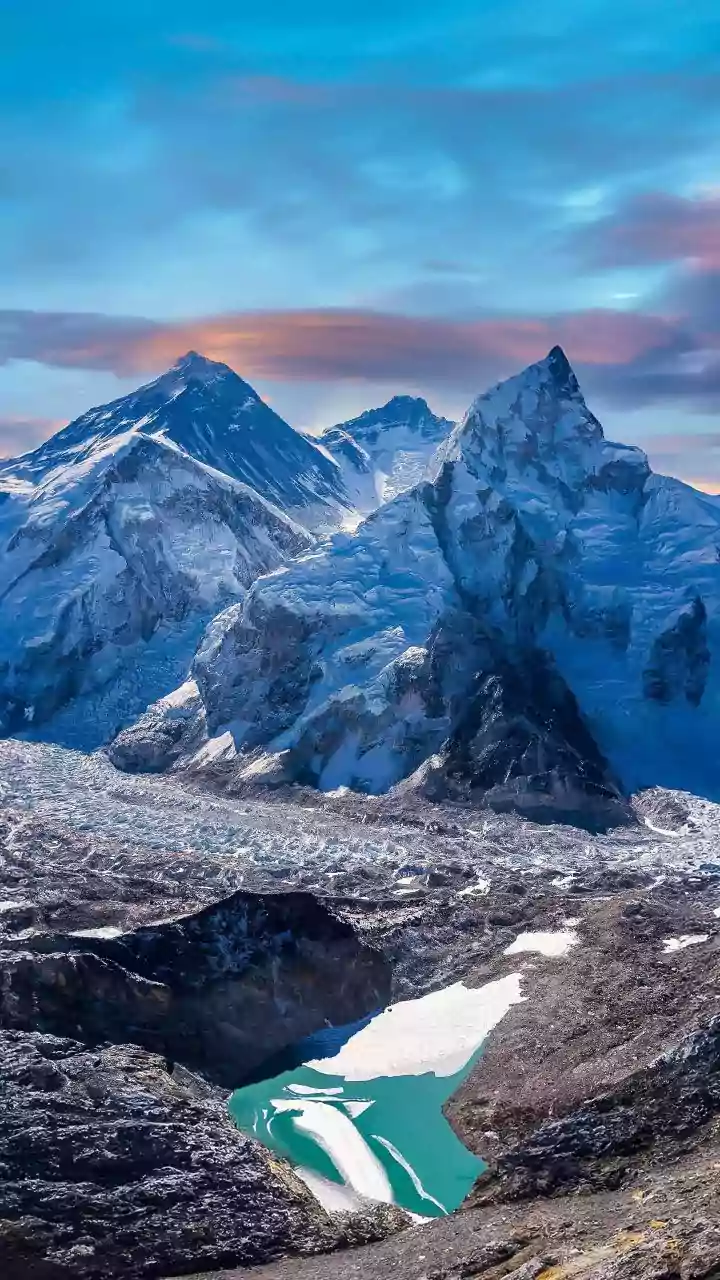
The retreat of glaciers creates new and dangerous hazards. One of the most significant is the formation of glacial lakes. As a glacier melts, the water often pools behind a natural dam made of moraine—a loose collection of rock, soil, and debris left behind by the moving ice. These moraine dams are inherently unstable. A landslide, an avalanche of ice or rock, or even just the pressure of the growing lake can cause the dam to burst suddenly. This results in a Glacial Lake Outburst Flood (GLOF), a catastrophic event where millions of cubic metres of water, mud, and boulders are released in a terrifying torrent down the valley. A recent disaster in August 2026, which killed over 1,300 people, was triggered by a massive collapse of rock and glacier ice, which destabilized the slope and unleashed a devastating flood. While not a classic GLOF, the event was driven by the same underlying factors: thinning glaciers and thawing permafrost made worse by climate change.
Nepal's Vulnerable Valleys
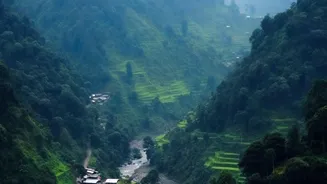
For the people living in Nepal's narrow river valleys, these mountain hazards pose an existential threat. Communities and critical infrastructure, including roads, bridges, and hydropower plants, are often situated directly in the path of potential floods. The August 2026 disaster saw a slurry of water, ice, and sediment travel at nearly 190 kilometres per hour, sweeping through communities and causing billions of dollars in damage. Scientists have noted that events of this magnitude can exceed the limits of adaptation, as early warning systems are no match for the speed and volume of such a debris flow. Nepal, which contributes less than 0.1 percent of global greenhouse gas emissions, finds itself on the front lines, paying a heavy price for a crisis it did little to create.
A Shared Regional Crisis
The threat is not confined to Nepal's borders. The rivers that begin in the Himalayas flow down into India and other South Asian nations, supporting agriculture, industry, and the livelihoods of an estimated two billion people. Therefore, a disaster upstream has profound consequences for the entire region's water security. Experts warn that the Himalayas are already a major disaster hotspot, and the increasing frequency of floods and landslides threatens to create a vicious cycle. Disasters disrupt supply chains, displace populations, and strain economies, leaving less money for building future resilience. The crisis unfolding in Nepal's mountains is a stark reminder of a shared vulnerability and the interconnected nature of the Himalayan ecosystem, demanding a coordinated response that transcends national boundaries.