








The Challenge of the Upper Stage
In any rocket launch, the first stage booster provides the initial massive thrust to get off the ground. But it's the second, or upper, stage that does the high-precision work of delivering a payload, like a satellite, into its final orbit. Because they
travel so fast and so high, these upper stages have historically been incredibly difficult to recover. They either burn up on reentry or are left to drift in orbit, contributing to the growing problem of space debris. Reusing the first stage has become more common, but the upper stage has remained the holy grail of rocket reusability due to the extreme speeds and temperatures involved in its return journey.
A New Design for a New Job
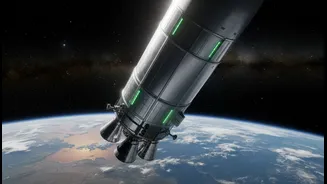
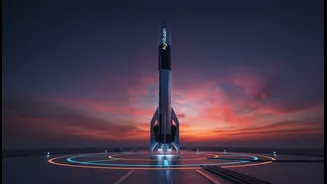
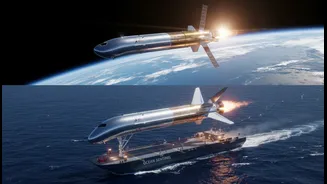
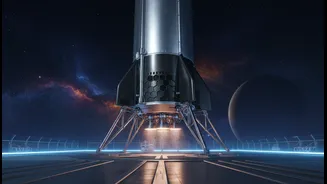
Companies like Stoke Space are developing a new generation of launch vehicles designed for complete and rapid reuse from the very beginning. Stoke's Nova rocket features an innovative upper stage that is engineered not just to survive reentry, but to be ready for another flight within 24 hours. Instead of a traditional fragile heat shield, it uses a robust, actively cooled metallic shield. This design, combined with an engine capable of multiple restarts, allows it to perform a powered, vertical landing back on Earth, much like a first-stage booster. The company has already conducted successful 'hop' tests of its prototype upper stage, demonstrating the vehicle's key landing technologies.
More Than Just a Delivery Service
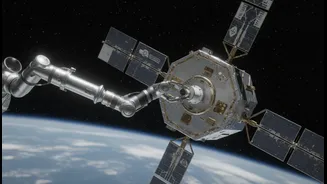
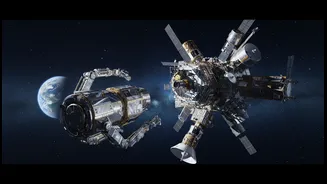
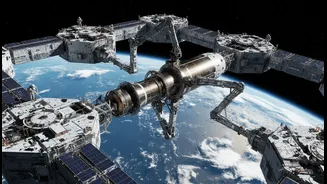
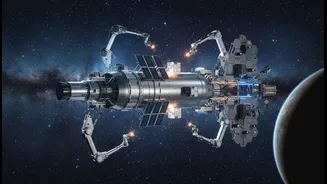
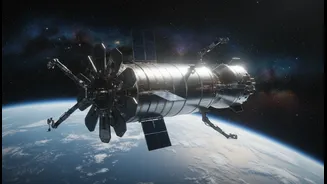
The true game-changer isn't just bringing the upper stage home; it's what it can do before it returns. Because Stoke's upper stage is designed to be highly durable and has the ability to restart its engines in space, it can perform additional tasks after deploying its main payload. Instead of immediately deorbiting, the stage could remain in orbit for an extended period, functioning as a mobile, powered platform. This gives it a 'second job'. The company states its vehicle is designed for dynamic space operations, including rendezvous, capture, and long-dwell operations. This opens the door to entirely new mission profiles beyond simple satellite delivery.
The Orbital Platform in Action
Once its primary mission is complete, an upper stage from a future flight—like the speculative 'Mission-02'—could transform into a versatile hub. It could serve as a host for scientific experiments that need exposure to the space environment. It could also act as a service vehicle, capable of inspecting, refueling, or repositioning other satellites. Another potential application is in addressing the space debris problem, by using the platform to capture and deorbit defunct satellites. This transforms a piece of hardware that would typically become a liability into a valuable asset for maintaining the orbital environment.
Building a Sustainable Space Economy
This shift from a disposable to a reusable and multi-purpose model is fundamental to building a larger, more sustainable economy in space. Companies like Nanoracks have also explored concepts for converting spent rocket stages into 'Outposts' for research and other activities. By designing vehicles like the Nova upper stage for a second life, companies can dramatically lower the cost of access to space. This makes new ventures commercially viable, from in-space manufacturing to advanced research. It also creates the foundational infrastructure needed for a more complex and interconnected network of services in orbit, all while using flight-proven hardware for every mission.