







Why AI Has a Water Habit
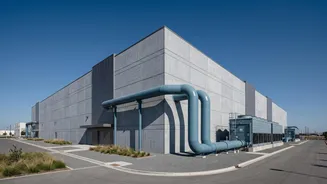
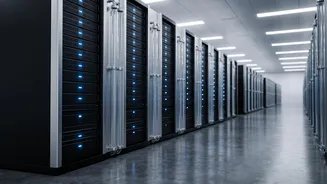
Data centres are the backbone of the digital world, housing thousands of powerful servers that process everything from your emails to complex AI models. These servers generate a tremendous amount of heat. To prevent them from overheating and failing,
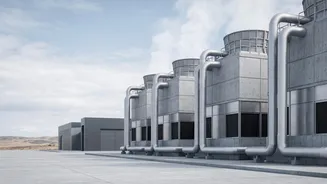
they must be constantly cooled. While several cooling methods exist, a majority of large-scale data centres rely on water-based evaporative cooling because it is energy-efficient. This process involves circulating water to absorb heat and then releasing that heat as the water evaporates into the atmosphere. The recent explosion in generative AI has intensified this demand significantly. AI workloads are far more computationally intensive than traditional tasks, meaning the servers run hotter and require even more cooling, and consequently, more water.
Putting a Number on It
The scale of water consumption is staggering. A single large data centre can use up to 5 million gallons of water per day, comparable to the daily needs of a city with 50,000 people. Some estimates suggest that just 20 to 50 queries with an advanced AI model can consume a standard bottle of water. Tech giants have started disclosing their water usage, revealing the industry's enormous footprint. In 2023, Google reported using over 5 billion gallons of water for its data centres. A significant portion of this water is often potable, drawn from the same sources—rivers, lakes, and aquifers—that supply drinking water to local communities. This direct consumption removes water from the local cycle, a concern especially in areas already facing water scarcity.
The Collision in India
For India, this global trend presents a critical challenge. The country is in the midst of a data centre construction boom, with investments from major global tech companies pouring in. Capacity is projected to quadruple in just four years. However, this expansion is happening in a nation already grappling with significant water stress. Projections from S&P Global indicate that 60-80% of India's data centres will face high or extremely high water stress within the decade, particularly in major hubs like Mumbai, Chennai, and Bengaluru. In 2024-25, India's data centres consumed an estimated 150 billion litres of water, a figure expected to more than double by 2030. Compounding the issue, state policies often incentivise data centre construction with promises of uninterrupted water supply, but lack mandates for transparent reporting on water use or assessments of the impact on local water tables.
The Search for Smarter Cooling
The industry is not blind to the problem, and the race for sustainable solutions is on. One of the most promising advancements is the wider adoption of liquid cooling, particularly closed-loop systems. Unlike open-loop evaporative cooling, where water is lost to the atmosphere, closed-loop systems use a sealed coolant that is continuously recycled, virtually eliminating water loss. Direct-to-chip cooling, a form of liquid cooling, brings the coolant into direct contact with the hottest components, offering superior efficiency. Companies are also exploring the use of non-potable water, such as treated wastewater or harvested rainwater, for their cooling needs, reducing the strain on freshwater supplies. Google, for instance, chose air cooling for a new facility in a water-scarce area of Arizona, demonstrating that design choices can be adapted to local environmental conditions.