







A Digital Watchguard for Crops
For generations, farmers have relied on visual inspection to spot trouble in their fields—a discoloured leaf here, a wilting stem there. But by the time these symptoms are visible to the human eye, the infection may have already spread. Artificial intelligence
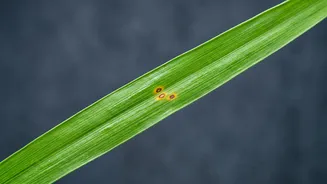
is changing this reactive approach into a proactive one. The most common application involves using AI models, particularly Convolutional Neural Networks (CNNs), to analyse images of crops. These images can be captured by anything from a farmer's smartphone to a camera-equipped drone flying over vast fields. The AI, trained on millions of images of both healthy and diseased plants, learns to identify subtle visual cues like spots, lesions, or changes in colour with incredible speed and accuracy. This allows for a diagnosis in seconds, rather than days or weeks, giving farmers a crucial head start in treatment.
Detecting the Invisible Signals of Sickness
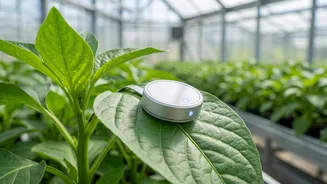
The latest breakthroughs go beyond what is visible. Researchers are now using AI to interpret data from advanced sensors that detect the invisible signs of plant stress. Much like humans, plants undergo physiological changes when they get sick, long before they show outward symptoms. Specialised sensors, such as hyperspectral or thermal imagers, can pick up on these changes. For example, a plant's temperature might rise, or its leaves might reflect light differently as its chlorophyll content changes. These signals are often too subtle for humans to notice. AI algorithms are trained to analyse this complex data, correlating specific spectral or thermal signatures with the onset of a particular disease. This method can essentially “read” a plant’s chemical fingerprint, offering a diagnosis weeks before a farmer would notice anything is wrong.
How AI Helps Design the Detection Method
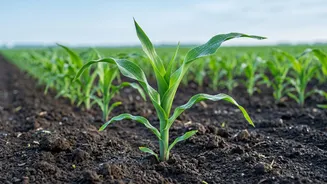
The headline's concept of AI 'designing' sensors points to a deeper integration of this technology. A prime example is a new platform in development that uses AI to identify the specific optical signals that corn and soybean plants emit when infected. In this system, researchers first used AI to pinpoint the exact genes that are triggered when a plant is under attack from a pathogen. They then discovered that this genetic trigger causes the plant to emit a unique optical signal. AI models were then trained to specifically look for this signal, effectively creating a new detection method from the ground up. This marks a shift from AI as a mere analyst of images to AI as a core component in discovering what to even look for. One company, InterPlant, aims to make this technology, known as CropVoice Whole Farm, available to farmers via a live dashboard starting in 2027.
Encouraging Results from Early Trials
The 'promise' of this technology is backed by encouraging, though preliminary, results. In controlled laboratory environments, many AI models have demonstrated impressive accuracy rates, often exceeding 90% in identifying common diseases. These systems can successfully distinguish between various fungal, bacterial, and viral infections, and even identify nutrient deficiencies. However, the real test is in the field, where conditions are far from perfect. Variables like changing light, different plant growth stages, and overlapping symptoms can confuse the algorithms. Consequently, accuracy in real-world deployments tends to be lower, typically in the 70-85% range, according to some studies. While this is still a significant improvement over manual methods, it highlights that the technology is still evolving and is best used as a powerful decision-support tool for farmers, not a final diagnosis.
The Path from the Lab to the Land
Before these AI-powered sensors become a common sight on farms in India and across the world, several challenges must be overcome. One of the biggest hurdles is data. AI models require vast, high-quality datasets to learn effectively, and data for specific crop varieties and local diseases can be scarce. Furthermore, the cost and complexity of advanced sensors and drone technology can be prohibitive for small and medium-sized farms. Researchers are working on developing more lightweight and efficient models that can run on simple devices and in areas with limited connectivity. The goal is to make these tools not only powerful but also accessible and affordable, democratising access to precision agriculture and helping farmers everywhere protect their yields more effectively.