







A Historic Natural Journey
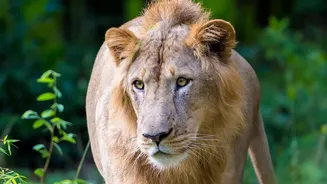
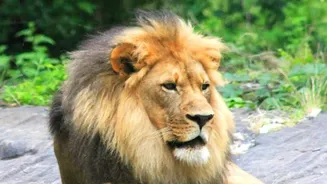
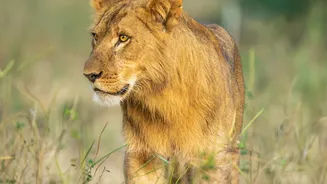
In early 2023, a lone male Asiatic lion, estimated to be around three and a half years old, accomplished something remarkable. Guided by instinct, it journeyed from the dense forests of Gir National Park and found its way to the Barda Wildlife Sanctuary,
some 100 kilometres away. Forest Department officials, who had been tracking the animal via a radio collar, confirmed its presence, marking a historic moment. This was not a government-led translocation but a natural dispersal — an animal seeking new territory. The event is a powerful testament to the instincts of the wild, as the young lion crossed agricultural fields, highways, and human settlements to reclaim an ancestral habitat, becoming the first of its kind to set foot in Barda in 144 years.
A Land That Forgot Lions
To understand the gravity of this return, one must look back to a different era. The last official record of a lion in the Barda region dates to 1879. In the 19th century, the magnificent Asiatic lion, which once roamed across much of western and central Asia, was hunted to the brink of extinction. Its range in India shrank dramatically until it was confined to a single pocket: the Gir forest in Gujarat. The forests of Barda, which were once part of the princely states of Porbandar and Jamnagar, fell silent. The disappearance was a story of habitat loss and the pressures of a changing world. For nearly a century and a half, Barda remained a forest without its apex predator, a missing piece in its ecological puzzle.
The Success Story of Gir
The lion's return to Barda is a direct result of one of India's greatest conservation triumphs: the revival of the Asiatic lion. From a perilously low population of just a few dozen individuals in the early 20th century, dedicated protection efforts have seen their numbers swell. The latest estimates put the population at nearly 700, a staggering success. However, this success has created a new challenge. The Gir Protected Area system is now at capacity. As the population has grown, lions have naturally begun to move out, seeking new territories across the Saurashtra landscape. This 'problem' of plenty has made finding a second home for the lions not just a desirable goal, but an urgent necessity.
Preparing a New Home
The Gujarat Forest Department did not leave this to chance. For years, Barda Wildlife Sanctuary has been carefully prepared as a potential second home for lions under the central government's 'Project Lion'. The logic was simple: Barda’s terrain and forest type are very similar to Gir's, making it an ideal candidate. Authorities have been working diligently to improve the habitat and, most importantly, to increase the prey base. By nurturing populations of animals like sambar, nilgai (blue bull), and wild boar, they ensured that any lion arriving would find a landscape ready to sustain it. The natural arrival of this male lion is the first, crucial validation of this long-term strategy.
An Insurance Policy for a Species
Establishing a second, geographically separate population of Asiatic lions is a critical goal for conservation science. Relying on a single population, even a thriving one like Gir's, is a risky gamble. A single disease outbreak, a natural disaster, or an epidemic could have a devastating impact on the entire species. By encouraging the establishment of a new population in Barda, conservationists are creating a vital insurance policy. This lone pioneer is more than just a single animal; he represents the first step towards building that resilience. His successful journey and settlement will provide invaluable data for officials as they plan the next phases of securing the long-term future of the Asiatic lion.