
From Vision to Viaducts
The Mumbai-Ahmedabad High-Speed Rail (MAHSR) corridor has been a topic of national conversation since its foundation stone was laid in 2017. Spanning 508 kilometres, the project promised to slash travel time between the two financial hubs from over six
hours to just about two, using Japan's famed Shinkansen technology. After navigating early challenges, including complex land acquisition and pandemic-related delays, construction is now visibly and rapidly progressing. The project, implemented by the National High Speed Rail Corporation Limited (NHSRCL), is no longer just a blueprint; it is a sprawling construction site transforming the western Indian landscape.
Where We Are in September 2026
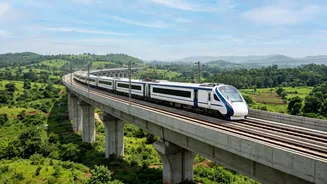
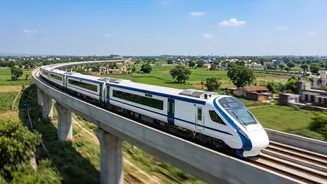
As of late 2026, the project has achieved significant milestones, particularly in Gujarat. Railway Minister Ashwini Vaishnaw has confirmed that the first section is slated for operation in 2027. Construction work on key stretches like Surat-Vapi and Surat-Bilimora is advancing at a brisk pace, with completion targeted for December this year. Recent updates from NHSRCL show that hundreds of kilometers of viaducts—the elevated structures the train will run on—and pier work are complete. Work on several stations is in advanced stages, and track-laying has begun on completed sections, marking a crucial shift from civil construction to creating a functional railway line. While the Gujarat portion is speeding ahead, the section in Maharashtra, especially the complex undersea tunnel near Mumbai, is catching up after earlier delays.
The Shinkansen Edge and 'Make in India'
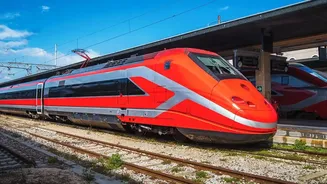
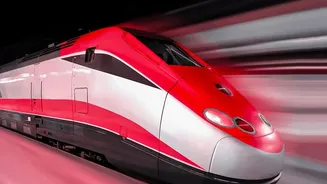
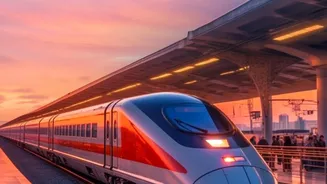
This isn't just any fast train; it's a technological leap. The project employs Japan's Shinkansen system, renowned globally for its punctuality and unparalleled safety record. The E5 series trains, capable of operating at speeds up to 320 kmph, are being adapted for Indian conditions. Crucially, the project is also a massive catalyst for the 'Make in India' initiative. The first coach body frame for testing was recently completed, a significant step toward building indigenous high-speed rail manufacturing capabilities. This involves not just assembling trains, but also fostering an entire ecosystem for high-tech components, from advanced track systems to signalling and electrification, creating thousands of jobs and developing new skills.
More Than Just Speed
The bullet train's impact extends far beyond reducing travel time. Economists and urban planners see it as a transformative force for the entire region. The corridor connects major industrial and commercial hubs like Surat, Vapi, and Vadodara, which is expected to boost economic integration and create new business opportunities. The project has already generated significant employment, with an estimated one lakh jobs created during the construction phase. Furthermore, development is anticipated in real estate and urban infrastructure around the twelve planned stations along the route. By providing a faster, safer, and more reliable alternative to road and air travel, the bullet train is poised to reshape how people live, work, and invest across Maharashtra and Gujarat.
The Road Ahead
While the finish line for the entire 508-km corridor is still a few years away, the next 12 to 18 months are critical. The focus is shifting towards the phased commissioning of the Gujarat section. The first major trial runs are expected to take place in mid-2027, which will be a landmark moment for Indian Railways. The successful launch of the first operational stretch, likely between Surat and Bilimora or Vapi, will be a testament to the project's progress and a preview of the future of travel in India. Watching this first section become operational will be the clearest indicator yet that India's high-speed rail ambitions are firmly on track.