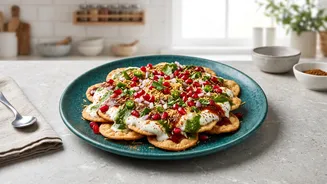


The Foundation: Crisp Papdi is Non-Negotiable
The entire structure of your chaat rests on the quality of your papdi. These deep-fried flour crackers are the base, and their primary job is to provide a sturdy, crunchy contrast to the soft toppings. If your papdi is stale, poorly stored, or bends instead
of snaps, the chaat is doomed before you even begin. The goal is to keep them as dry as possible for as long as possible. When assembling, arrange them on a plate with a little space, rather than piling them up, to prevent moisture from getting trapped. Whether you buy them or make them at home, ensure they are stored in a completely airtight container away from any humidity.
The First Toppings: Potatoes and Chickpeas
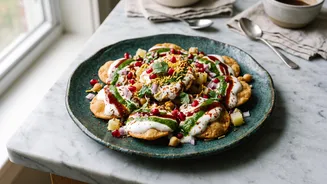
Once the papdi are arranged, the first layer of toppings should be your boiled potatoes and chickpeas. These starchy elements act as a buffer, protecting the papdi from the wetter ingredients to come. It’s crucial that these ingredients are cooled to room temperature before layering. Hot potatoes or chickpeas will create steam, which is the enemy of a crisp papdi. Cut the potatoes into small, uniform cubes. These ingredients add substance and a soft texture that contrasts beautifully with the papdi, but they shouldn't be water-logged. Drain them well after boiling.
The Yoghurt Question: A Cooling Counterpoint
Here's where techniques diverge, but the logic remains the same. Many recipes call for adding the yoghurt (dahi) right after the potatoes and chickpeas. The yoghurt should be thick, creamy, and well-whisked—never sour or watery. Think of Greek yoghurt's consistency. A thin, runny yoghurt will immediately seep through the cracks and turn your papdi into a mushy mess. Seasoning the yoghurt with a pinch of salt and a little powdered sugar is a game-changer; unseasoned yoghurt can taste flat against the vibrant chutneys. This cool, creamy layer provides a necessary balance to the spice and tang that will follow.
The Chutney Drizzle: A Symphony of Flavours
Chutneys are the soul of the chaat, providing the signature sweet, spicy, and tangy notes. They are typically drizzled over the yoghurt. The two essential chutneys are a sweet tamarind-date chutney and a spicy green mint-coriander chutney. The consistency here is key. Chutneys for papdi chaat should be on the thicker side, able to hold their shape when drizzled, rather than being thin and watery. A runny chutney will disappear into the yoghurt and make the whole dish soggy. The layering of chutneys over the yoghurt allows each flavour to remain distinct, giving you a burst of sweet, then spicy, in every bite. Some variations also add a fiery red garlic chutney for an extra kick.
The Grand Finale: Spices, Sev, and Garnish
The final layers are all about adding that last burst of flavour and texture. After the chutneys comes a sprinkle of essential spices like chaat masala and roasted cumin powder. This is what gives chaat its iconic 'chatpata' taste. Next, a generous topping of sev (thin, crispy chickpea flour noodles) is essential for the final crunch. Use fine 'nylon sev' for the best texture. Chopped onions, fresh coriander, and bright red pomegranate seeds are added last. These not only add freshness and colour but also another layer of crunch and sweetness. Most importantly, these final toppings, especially the sev, must be added just before serving to ensure they stay crunchy.